
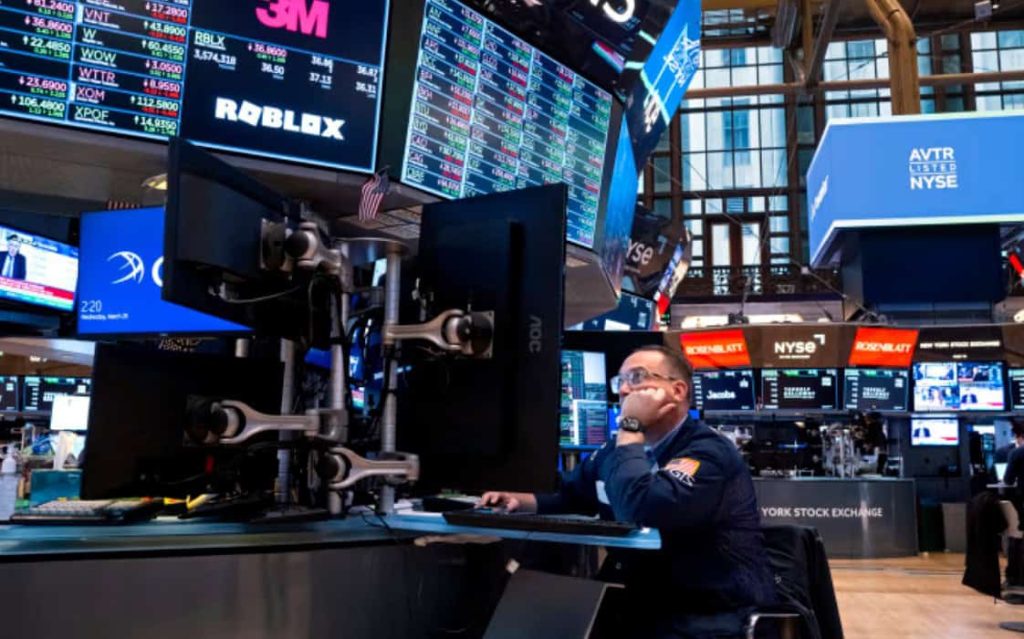
US stocks wavered on Tuesday after notching new all-time highs, as Wall Street waded through a fresh wave of earnings that brought a tariffs warning from General Motors (GM).
The Dow Jones Industrial Average (^DJI) edged up around 0.1%. Meanwhile, the S&P 500 (^GSPC) hovered below the flat line. The Nasdaq Composite (^IXIC) slipped nearly 0.2% ahead of the first Big Tech quarterly results.
The market has so far proved resilient in the face of tariff uncertainty, with the S&P 500 (^GSPC) and Nasdaq Composite (^IXIC hitting fresh record closes on Monday. Earnings season has been largely upbeat, buoying stocks and sentiment — though the market is now weighing how far the recent rally can run.
But earnings results from a wave of companies Tuesday were mixed. The stocks of General Motors’s (GM), Philip Morris (PM), RTX (RTX), and Lockheed Martin (LMT) sank after their quarterly results disappointed Wall Street.
General Motors reported that its core profit sank over 32% in the second quarter as tariff headwinds sapped $1.1 billion from its results. The Big Three automaker warned the hit would be deeper in the current quarter, providing food for thought to investors assessing the impact of President Trump’s trade policy.
At the same time, Wall Street is keenly waiting for second-quarter results from “Magnificent Seven” members Alphabet (GOOGL, GOOG) and Tesla (TSLA) on Wednesday. As the valuation of large-cap tech stocks soars, investors are hoping for reassurance that the hype around AI is more than just buzz.
The watch is on for signs of progress in trade talks as the clock ticks down to President Trump’s Aug. 1 deadline to strike a deal or face higher tariffs. Prospects for US-India pact appear to be faltering with negotiations deadlocked, as US talks with the EU, another key trading partner, also hit the buffers.
Jerome Powell’s speech Tuesday morning is also in high focus as the Federal Reserve chair comes under pressure from Trump to step down. While investors will scour his comments for insight into tariff risks to the US economy, Powell is expected to focus on regulatory issues rather than monetary policy in the blackout period ahead of the Fed’s July meeting.