
A co-founder of Super Micro Computer Inc. was charged in New York with conspiring to illegally divert billions of dollars in artificial intelligence technology to China.
US prosecutors charged Yih-Shyan “Wally” Liaw in a scheme to send high-performance computer servers assembled in the US with sophisticated AI capabilities to China in violation of US export controls. Liaw and others at the company allegedly sold the AI tech through a Southeast Asia company knowing it would be sent on to China.
Also charged in the case are Ruei-Tsang “Steven” Chang, who served as a manager in the company’s Taiwan office, and Ting-Wei “Willy” Sun, an outside contractor described by US authorities as a “fixer” who allegedly aided in the diversion.
Shares Fell
Shares of Super Micro fell more than 9% in late trading. The stock had been up 5.2% this year through Thursday’s close.
Liaw, a US citizen, and Sun, a citizen of Taiwan, were both arrested Thursday, according to a statement from the office of Manhattan US Attorney Jay Clayton. Chang, a Taiwanese citizen, remains a fugitive.
Liaw and Sun made initial appearances in federal court in San Jose, California. Their lawyers didn’t immediately respond to requests for comment.
Super Micro said in a statement that it has put Liaw and Chang on administrative leave and ended its relationship with Sun. The company said it has been cooperating with the government’s investigation and will continue to do so.
The defendants’ alleged conduct “is a contravention of the company’s policies and compliance controls, including efforts to circumvent applicable export control laws and regulations,” Super Micro said in the statement. The company said it “maintains a robust compliance program and is committed to full adherence to all applicable US export and re-export control laws and regulations.”
Company-1
Prosecutors said that, beginning in 2024, the defendants and others caused the sale of $2.5 billion in Super Micro servers to the Southeast Asia company, which is identified in court papers only as “Company-1,” with the intention they would be passed on to China. The Chinese customers received Super Micro’s “flagship” products — servers incorporating Nvidia Corp. graphics processing units or GPUs — in unmarked boxes, according to the charges.
Super Micro is one of the biggest sellers of server machines based on Nvidia’s products, most of which cannot be exported to China at all under rules designed to protect US national security. Super Micro accounts for about 9% of Nvidia’s revenue, according to Bloomberg supply chain analysis.
“Strict compliance is a top priority for Nvidia,” the company said in a statement. “We continue to work closely with our customers and the government on compliance programs as export regulations have expanded.”
It’s not the first time the US has made arrests for alleged smuggling of Nvidia chips to China.
In November, two Chinese nationals and two US citizens were charged in a scheme that allegedly used a fake real estate business in Tampa, Florida, as a front to move the shipments of hundreds of chips through Malaysia and ultimately to China.
In August, two Chinese nationals were charged with using a company based in El Monte, California, to export advanced Nvidia AI chips without obtaining the necessary government licenses.
Nvidia said it doesn’t provide support or service for products illegally sent to China.
Liaw, 71, co-founded Super Micro in 1993, according to a profile on the company’s website, and was on its board of directors. Since 2022 he was senior vice president, business development.
Liaw, Chang, 53, and Sun, 44, are each charged with conspiracy to violate export controls, which carries a maximum prison sentence of 20 years, if they’re convicted. They’re also charged with conspiracy to smuggle goods from the US and conspiracy to defraud the US, both of which are punishable by up to five years behind bars.
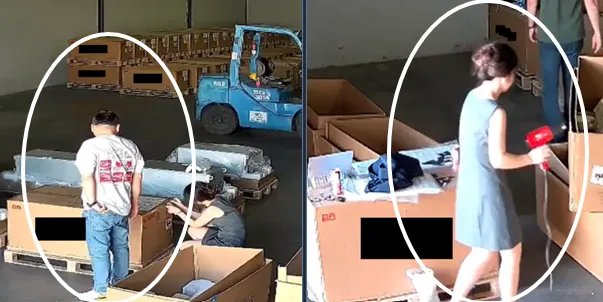
Prosecutors said the defendants and other company executives prepared phony documents and communications to ensure the shipments were approved internally. To deceive Super Micro’s compliance team, they staged non-working “dummy” servers where Company-1 was supposed to be storing servers that had already been shipped to China.