Federal Reserve officials say the war in Iran could impact the near-term inflation outlook and add to economic uncertainty, potentially pushing back the timeline for any further interest rate cuts under consideration until later this year.
New York Fed president John Williams said this week that the war in Iran is “something that would obviously affect kind of a nearer-term inflation outlook. We’ll have to see how persistent this is and how long this is, but it would have an effect on overall inflation.”
Williams also noted that the Iran war raises uncertainty about the outlook for the economy.
“Nobody can be sure of how long this will last or the broader implications of these events in terms of financial conditions and oil prices,” he said.
The US isn’t as dependent on oil as it was 50 years ago, however, and experience has shown that movements in oil prices don’t fundamentally shift the economy, Williams added.
“I look at this really through the lens of how does it affect the underlying kind of strength of the US economy, the inflation rate, and some of the uncertainty around that,” he said. “So we’ll have to wait and see.”
Boston Fed president Susan Collins also said this week that the conflict in Iran exacerbates what she sees as a considerably uncertain economic outlook. While she sees a still-uncertain inflation picture with continued upside risks, Collins said she still thinks inflation will decrease again later this year as effects from tariffs fade.
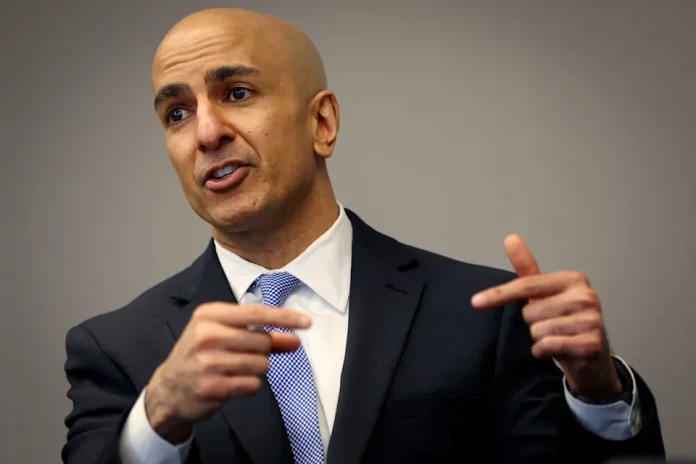
Meanwhile, Minneapolis Fed president Neel Kashkari, who had penciled in one interest rate cut this year, told Bloomberg this past week that the attacks on Iran make him less certain about that.
Kashkari said he needs to see more data and that the key question right now for inflation is how persistent higher energy prices are.
Oil prices clocked their biggest weekly gain since 1985 as the conflict passed the one-week mark and the critical Strait of Hormuz remained essentially closed off to through-traffic. West Texas Intermediate (CL=F) was trading around $90 a barrel Friday, up from the low $60s before the conflict.
President Trump has laid out a baseline of four to five weeks for the war, but also said that he has the capacity and will to go for longer to decapitate the current regime from power in Tehran.
Meanwhile, US Central Command is reportedly asking the Pentagon to send more military intelligence officers to its headquarters in Tampa, Fla., to support operations against Iran for at least 100 days but likely through September.
“Right now, it’s just too soon to know what imprint this has on inflation and for how long,” Kashkari said.
Elsewhere, Fed governor Stephen Miran said he is less concerned about the spike in oil prices leading to higher gas prices and the possible impact on inflation and the economy.
“Typically, the Federal Reserve doesn’t respond to higher oil prices like that,” Miran told CNBC. “It [boosts] headline inflation, but it tends to be a one-off shock. When you think about core inflation [which does not include energy prices], it tends to be more predictive of where inflation is going over the medium term than headline inflation.”
Like Miran, Fed Governor Chris Waller also said he doesn’t expect the spike in gas prices to lead to a sustained increase in inflation. Waller said it will only matter if higher energy costs are sustained for a long time, telling Bloomberg the oil price shock looks more like a one-off event than what we saw in the 1970s, when OPEC (The Organization of the Petroleum Exporting Countries) cut oil production in response to US and Western support of Israel.
Fed officials are expected to hold interest rates steady when they meet later this month, as they did at their gathering in January.
Investors were pricing in 95% odds as of Friday that the Fed will hold rates steady this month.