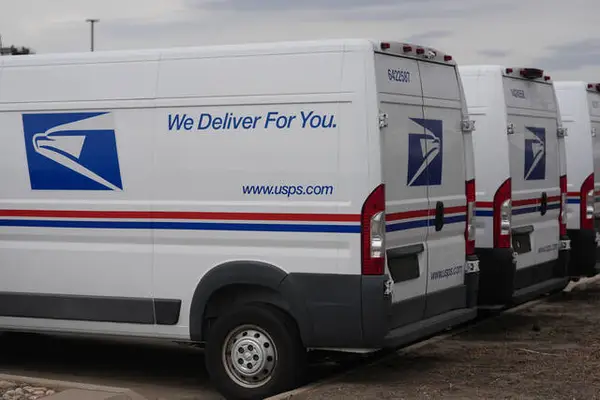
The US Postal Service plans to raise prices to offset rising transportation expenses including the cost of fuel, a sign that the beleaguered mail carrier is feeling the strain of higher oil prices as the war in Iran continues.
The USPS will increase prices by 8% on some packages until mid-January of next year, the USPS said in a statement Wednesday. The change will apply to its Priority Mail, Priority Mail Express, USPS Ground Advantage and Parcel Select offerings. Other products such as First-Class Stamps won’t be affected, it said.
If approved by a USPS oversight body, the increase will take effect on April 26.
The plan highlights how soaring oil and fuel prices stoked by the war in Iran are reverberating across the global economy. The rapid gains have stoked concern about the impact to consumers and companies alike. As heavy users of fuel, transportation companies are particularly exposed. United Airlines Holdings Inc. Chief Executive Officer Scott Kirby warned that airfares may need to rise 20% in light of surging jet fuel prices.
The postal service is also facing a dire financial situation of its own, with Postmaster General David Steiner telling lawmakers earlier this month that the agency could run out of cash in less than a year. He has hired restructuring firm Alvarez & Marsal for recommendations to improve the organization’s finances.
Although temporary, the increase will act as a bridge to “a permanent mechanism” to adjust prices to reflect market conditions. The change will help the USPS fulfill its obligation to service every address in the country “in a more financially sustainable manner going forward,” the agency said.
Steiner earlier this month said that the USPS might need to implement a fuel surcharge if the cost of diesel stays high. While private carriers like United Parcel Service Inc. and FedEx Corp. commonly use surcharges to offset higher fuel costs, the postal service has not done so in its recent history.
“Every single day, we drive the equivalent of 13 trips to the moon and back,” Steiner said in a March 4 interview with Bloomberg News. “You have to be concerned about oil prices.”
In the US, diesel prices at the pump have risen to an average of $5.37 a gallon, according to the American Automobile Association — up more than $1.60 since the start of the war. That move has occurred in tandem with a spike in futures, which are up more than 48% from the start of the war.
Gasoline prices have also moved sharply, with retail prices currently hovering just below $4 a gallon on average nationally. Futures are up 51% since the US first attacked Iran.
Fuel represented about 2% of the postal service’s annual operating expenses last fiscal year, according to a filing from the agency.