At a historic auditorium in Washington this week, Silicon Valley executives, Trump administration officials and members of Congress gathered in a sea of button-down shirts to extol the virtues of artificial intelligence.
Two days later, labor leaders joined a handful of US lawmakers in a DC hotel ballroom to strategize how to fight back as AI threatens to displace workers and remake the global economy.
The dueling events – one funded by top tech companies including OpenAI and Alphabet Inc (GOOG, GOOGL).’s Google, the other sponsored by the powerful labor union AFL-CIO – stood out in a week of AI forums across the nation’s capital. Taken together, they highlighted the starkly different views on what role the government should take in shaping AI’s future.
“What’s interesting isn’t just the volume of events” but “how differently the same technology is being framed depending on the room,” said Joseph Hoefer, AI policy lead at lobbying firm Monument Advocacy, which represents clients like Google and Accenture.
Washington is now ground zero for an advocacy battle over how to write the rules of the road for a nascent technology that promises to reshape everything from education and health care to war-fighting. This week’s conversations unfolded days after the White House rolled out its blueprint for national legislation to regulate AI — one that predictably took a lighter touch.
Industry and civil society agree on one thing: the federal government should create a national standard on AI. But whether the rules should prioritize acceleration of AI or safeguards on the technology is at the center of the debate as lawmakers prepare to craft legislation.
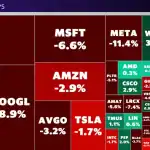
The stakes of the fight for policymakers’ hearts and minds are enormous: Amazon.com Inc (AMZN)., Meta Platforms Inc. (META), Google and Microsoft Corp. (MSFT) plan to spend a combined $650 billion this year on AI infrastructure. Yet their massive investments have spurred political blowback, as voters object to rising electricity bills due to data centers and the risk of job losses to AI.
Those tensions were on display throughout the week, as lawmakers who appeared at the events acknowledged that the public is more concerned than ever about the potentially harmful impacts of AI.
“You’ve got to explain the possibilities and opportunities of AI to people, especially members of Congress and legislators,” said Democratic Representative Josh Gottheimer, who spoke at both the Hill and Valley Forum and the American AI Festival, organized by AI policy nonprofit SeedAI.
More than 1,000 attendees packed the room at Tuesday’s invite-only Hill and Valley Forum, which featured some of the biggest names in business and government. Headliners included JPMorgan Chase & Co. (JPM) CEO Jamie Dimon, OpenAI (OPAI.PVT) Chief Operating Officer Brad Lightcap and venture capitalist David Sacks, who recently relinquished his role as White House AI czar.
“This forum was founded to basically end this Cold War between Silicon Valley and the Hill,” said event co-founder Delian Asparouhov, partner at Founders Fund and president and co-founder of Varda Space Industries.
Speakers spent the day lavishing praise on President Donald Trump, who has made speeding AI development and quashing state-level AI rules a centerpiece of his economic agenda. Discussions focused on maintaining the US’ lead over China and the need to streamline government adoption of the technology, especially by the military.
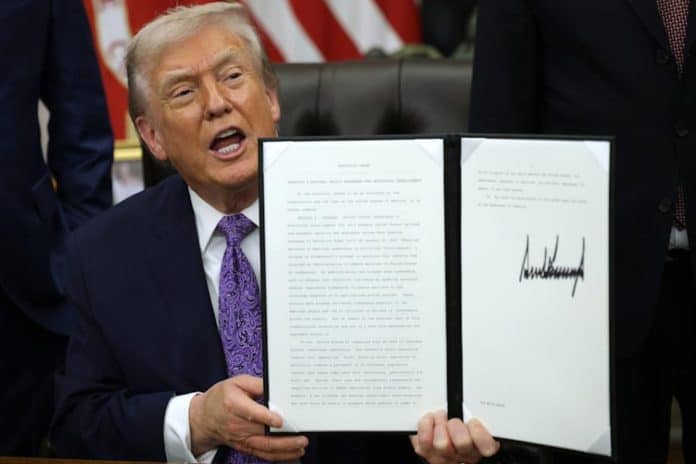
In another sign of the deepening ties between Silicon Valley and the White House, Trump this week appointed several industry executives, including Meta’s Mark Zuckerberg, Nvidia Corp. (NVDA)’s Jensen Huang, and venture capitalist Marc Andreessen, to a new presidential technology council focused on AI policy.
Sacks, who will co-chair that council with White House Science and Technology Policy Director Michael Kratsios, struck an optimistic tone on Thursday, predicting Congress could pass bipartisan AI legislation within months. Yet competing pressures from the anti- and pro-regulation camps signal tough challenges for compromise.
The Iran war is also adding urgency to the debate, with the US deploying AI in its military campaign. Palantir Technologies Inc. Chief Technology Officer Shyam Sankar said in a Bloomberg Television interview from the Hill and Valley Forum that the war would be remembered as the first major conflict “that was really driven, enhanced and made substantially more productive with technology, with AI.”
AI’s role in combat has drawn close scrutiny in recent weeks, after the Pentagon declared leading AI provider Anthropic PBC a supply chain risk after the firm refused to drop its demands for additional safeguards on military use of its technology. The company late Thursday won a court order blocking the order, a decision defense officials plan to appeal.
On Thursday, attendees at the American AI event took turns trying on Meta’s virtual reality glasses and testing Qualcomm Inc.’s robotics processors. Hosted at a dimly lit Bitcoin bar in downtown DC, the event featured state and federal government officials as well as AI scientists examining how to ready the country for AI’s transformative impacts.
“We’re at the part where it’s real,” said Austin Carson, founder and chief executive officer of SeedAI. “People are thinking about either the utopia or dystopia.”
The mood was more grim at the AFL-CIO conference. “Raise your hand if you want AI that makes us all economically obsolete and simply replaces us,” said Max Tegmark, co-founder of the Future of Life Institute. “AI is less regulated than sandwich shops here in the US.”
Liz Shuler, president of the AFL-CIO, said the labor AI conference wasn’t planned as counter-programming for the tech-friendly events throughout the week, but she was glad it worked out that way.
“We’re fed up with the focus on the tech companies, which are in full view right now, basically running our government,” Shuler said. “We’re fed up with these other casts of characters who don’t talk about work and workers.”
Events spilled into jam-packed evening parties and cocktail hours. Policy wonks and software engineers were turned away at the door of the conservative tech think tank Foundation for American Innovation’s reception on Monday evening, held at MAGA hot spot Butterworth’s.
The group handed out stickers emblazoned with cheeky AI policy mottos such as “China hawk badge of shame” and “Everything is computer.” Later, at the high-end Ned’s Club, venture capitalists rubbed shoulders with defense officials.
Not everyone in the AI policy world thought the flashy, expensive events were worth the time.
“I haven’t been to any of those things because I’m busy working,” said Dean Ball, an AI researcher who previously served as an adviser in Trump’s Office of Science and Technology Policy. “Staffers can become more informed about AI by staying home and using AI.”