Unemployment dipped, but more people left the workforce: What's going on in the job market?
June's gain of 57,000 jobs failed to meet economists' expectations, with payroll growth cooling after months of growth. Still, the labor market appeared to be on steady footing, with the unemployment rate…
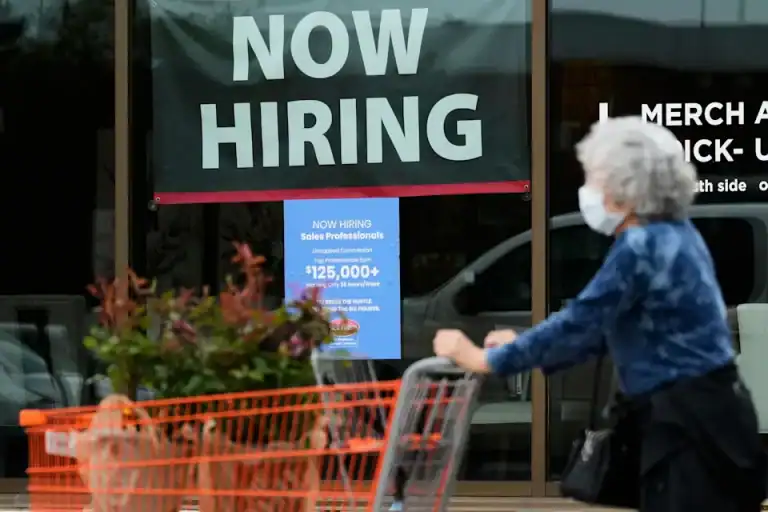
June’s gain of 57,000 jobs failed to meet economists’ expectations, with payroll growth cooling after months of growth. Still, the labor market appeared to be on steady footing, with the unemployment rate sliding to 4.2%.
But look under the hood of Thursday’s jobs report, and there’s some evidence that this remains a tough — or at least weird — labor market for job-seekers.
Long-term unemployment — the measure of those who have been out of work at least 27 weeks as a share of the total number of jobless people — dipped a tad in June but is holding above 27%. Outside of the COVID-19 pandemic and recovery, long-term unemployment hasn’t been that high since 2016. Last month, 1.9 million people had been out of work for almost seven months or longer — 286,000 more than a year ago.
Meanwhile, the labor force participation rate, or the share of the population who are working or have actively sought employment, slid to 61.5%, the lowest since March 2021. Though participation could be dropping for a number of reasons and is expected to fall to 61.1% over the next decade as the population ages and fewer young people enter the workforce, it could likewise be declining further as some people grow fed up with job searching.
“This was a big drop in one month, and it happened to hit when we also weren’t hiring up a lot in leisure and hospitality, which tends to hire up during this time of year,” KPMG chief economist Diane Swonk told Yahoo Finance. “The lack of seasonal hires obviously also discouraged some workers, and I think that’s important.”
“The lack of seasonal hires obviously also discouraged some workers, and I think that’s important.
Some 720,000 people left the labor force in June, helping the jobless rate edge down.
Of particular concern: The labor force participation rate for those in their prime working years fell to 83.3% in June, suggesting the trend wasn’t driven solely by people aging out of the workforce.
“What mechanically happens is that the unemployment rate has fallen a little bit and people will think, ‘Oh, that’s a good thing,'” said Elise Gould, senior economist at the Economic Policy Institute. “But it fell for the wrong reasons. It fell because so many people left the labor force — maybe they didn’t think there were going to be jobs for them.”
A measure of unemployment called U-6, which includes those marginally attached to the labor force and people working part-time for economic reasons, declined a bit between May and June but remains above its pre-pandemic level, Swonk noted. The unemployment rate for recent college grads is also elevated.
“Because economic growth is concentrated in a few hands of a few households and firms, it has left the aggregates looking better than it feels to most Americans,” Swonk said.
This week’s Job Openings and Labor Turnover Survey similarly contained some quirks. A better-than-expected 7.6 million positions were available, but the hiring rate remained at 3.3%, quitting remained flat, and the layoff rate ticked up slightly. Put another way: Workers weren’t really moving anywhere.
That leaves the labor market vulnerable to swings, both good and bad. And it makes it an exceptionally rough time to be on the hunt for work.
“The stability of a stagnant labor market depends entirely on separations staying this scarce or, conversely, hires remaining subdued,” Laura Ullrich, director of economic research in North America at the Indeed Hiring Lab, said in an analysis Thursday. “It would not take much — a modest rise in layoffs, or a few more workers deciding to quit — to pull the net negative. More positively, we could see more robust employment growth if hiring picked up across a broader swath of the labor market.”
But it’s also possible that Thursday’s report, which Homebase chief economist Guy Berger called “strange” despite otherwise decent headline data, could amount to noise.
“We saw big declines in restaurant and hotel employment that clashed wildly with what we’d expect with the World Cup; and even stranger, we saw a very big and anomalous plunge in the employment of people ages 25-34,” Berger said in a statement. “I think we’re going to be chalking a huge chunk of this report to noise, and hoping for more clarity on the labor market a month from now.”