Warsh’s Balance-Sheet Panel Runs Into Market Reality Check
Wall Street strategists expect a group of senior academics and former policymakers assembled by Chairman Kevin Warsh to review the Federal Reserve's $6.7 trillion balance sheet will face a difficult balancing…
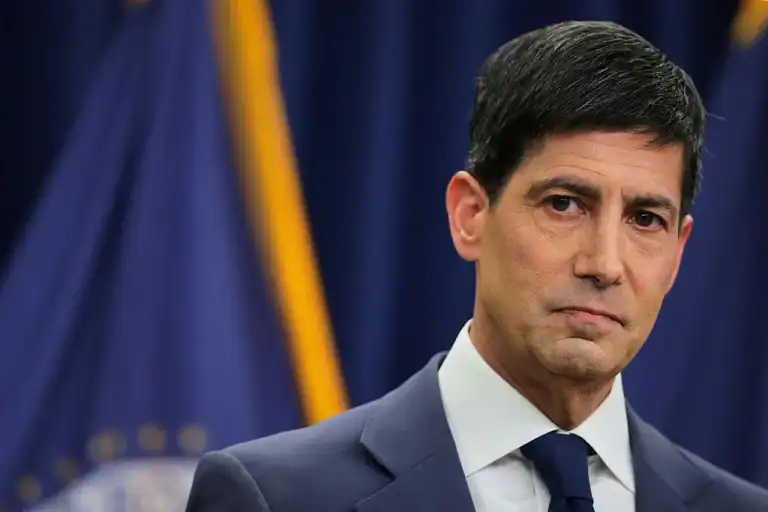
Wall Street strategists expect a group of senior academics and former policymakers assembled by Chairman Kevin Warsh to review the Federal Reserve’s $6.7 trillion balance sheet will face a difficult balancing act: shrinking the central bank’s holdings without destabilizing funding markets.
While the group’s academic heft lends credibility to the process, the lack of market experts among its members could result in solutions that are good in theory but difficult to implement, some of them warned.
Warsh last week announced the leadership of five task forces that will examine the Fed’s approach to key aspects of policy making, from inflation to communications, potentially leading to sweeping changes. But for investors, the balance-sheet review could be the most consequential.
“That is clearly an area with the Fed where Warsh has focused a lot of his attention,” and “it’s going to have the most salient impact on markets,” Ed Al-Hussainy, portfolio manager at Columbia Threadneedle said.
The group — led by former Fed Governor and Harvard University economics professor Jeremy Stein, former Reserve Bank of India Governor and University of Chicago Booth School of Business finance professor Raghuram Rajan, and Harvard University economics professor Karen Dynan — will be tasked with finding ways to pare back the Fed’s market footprint, which Warsh has long criticized.
Analysts say they will have to confront more than that, including how the central bank will respond to future crises that prompted successive rounds of asset purchases in the past — most notably in September 2019 when short-term interest rates skyrocketed, and again in March 2020 when the Treasuries market seized up at the start of the pandemic-induced dash for cash.
“The capacity to reduce the balance sheet is fairly limited,” said Joseph Abate, head of US rates strategy at SMBC Nikko Securities America. “The Fed’s behavior over the last few years, since 2019, shows the Fed doesn’t have any tolerance for repo rates trading high.”
“The capacity to reduce the balance sheet is fairly limited,” said Joseph Abate, head of US rates strategy at SMBC Nikko Securities America.
At stake is the smooth functioning of the financial‑market plumbing that underpins the Treasury market, where cash‑rich institutions such as money‑market funds lend short‑term capital and investors, including hedge funds, borrow against high‑quality collateral to fund strategies like the popular basis trade.
The concern is that shrinking the balance sheet too far could drain liquidity and spur volatility, undermining the Fed’s ability to control its rate‑setting tools and, in a worst‑case scenario, force position unwinds that spill into the broader Treasury market — the global benchmark for borrowing costs.
The group’s policy credentials and diverse backgrounds offer confidence, strategists said. Stein brings a financial-stability framework shaped inside the Fed during his governorship from 2012 to 2014, while Rajan has long warned about banks becoming too dependent on central bank liquidity. Dynan adds technocratic policy experience, having served as chief economist at the Treasury Department.
‘It’s credible economists who can lean on the Fed staff to figure out how to reduce the balance sheet,” Brij Khurana, portfolio manager at Wellington Management, said. Still, a smaller balance sheet will have implications on anything from the dollar to long-term Treasury yields, potentially inviting more market volatility, he said.
“A lot of hedge funds are in various forms of basis trades, as the Fed has held a large balance sheet and that is seen as being able to bail out markets,” Khurana said. “So a smaller balance sheet means there’s more potential for volatility in Treasury markets.”
For market veterans, memories of September 2019 remain fresh. That’s when a key overnight rate spiked to nearly 10% just as the Fed was tightening its balance sheet, forcing it to inject roughly half a trillion dollars into the system.
Last year, the Fed again abruptly stopped shrinking its portfolio and pivoted to adding reserves back into the financial system by buying Treasury bills amid signs of strain in funding markets.
For Wall Street strategists, any recommendations from the group that fail to address these risks could have limited practical use, especially given the lack of market expertise among its ranks. It will ultimately be up to the Fed to implement the proposals.
“There’s no people from banks or financial markets to opine on what happens if you push repo rates higher or you absorb a bigger share of bill issuance,” Abate said, noting that the task group could offer “theoretical solutions but practical implications are going to argue against” them.
Lou Crandall, senior economist at Wrightson ICAP LLC, is skeptical about a return to the era of small Fed balance sheets.
“I simply do not understand the modern vogue for emaciated heroin chic when it comes to central bank balance sheets,” he said. “I cut my teeth in scarce reserves and it was so costly for the Fed to operate in and it was always an accident waiting to happen.”