Edible Garden Lifts Revenue 12% as Prairie Hills Debt Grows
Edible Garden's fiscal second quarter brought a 12% revenue gain, better cash flow and a major retail expansion — alongside more borrowing for the Prairie Hills build. The stock closed flat at 1.67.
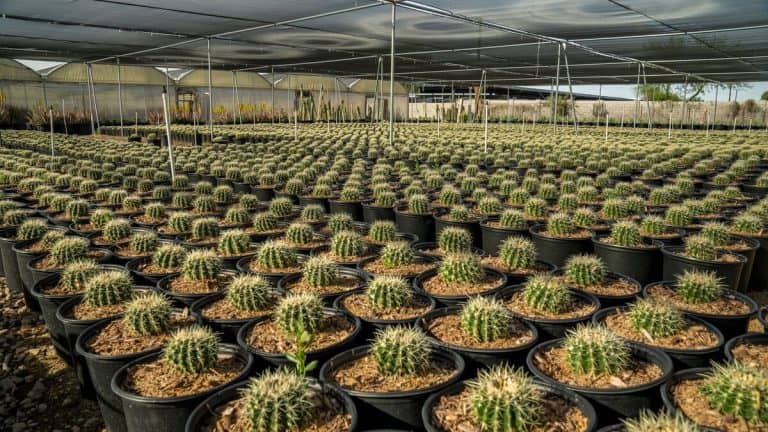
Edible Garden AG Inc (NASDAQ: EDBL) said Q2 2026 revenue rose 12% with improved cash flow, while debt increased to fund its Prairie Hills facility expansion; the shares last traded at 1.67, unchanged on the day, on Aug. 14, 2026.
Edible Garden AG Inc (NASDAQ: EDBL) used its fiscal second-quarter 2026 earnings call to make a fairly narrow argument: sales are growing, cash burn is easing, and the shelf space it is winning from failing competitors is worth the borrowing it is doing to expand capacity. Revenue rose 12% in the quarter, the company said, alongside improved cash flow and what management described as strategic wins tied to consolidation across the controlled-environment produce industry.
The market did not move on it. EDBL last traded at 1.67 on Aug. 14, 2026, flat on the day, having ranged between 1.58 and 1.70. That is a stock the market is watching but not repricing — the intraday swing was wide relative to the level, yet the close matched the prior close exactly. Broader indices were quiet as well: the S&P 500 proxy SPY closed at $776.34, down 0.20%, with the Nasdaq 100’s QQQ at $731.07, off 0.14%, and the Dow-tracking DIA at $536.80, down 0.21%.
What a 12% revenue gain means for a company this size
Percentage growth is the easiest number for a small-cap to produce and the hardest for investors to interpret. For a hydroponic herb and leafy-greens grower selling into grocery chains, a 12% top-line increase can come from three very different places: more stores, more shelf facings per store, or better realized pricing. Management pointed to retail expansion, which suggests distribution rather than price is doing the work — the healthier of the two, because a new door tends to stay open for at least a season, while a price increase invites the buyer to reopen negotiations.
The company did not, in the material summarized from the call, tie the 12% to a specific dollar figure, and it would be wrong to guess one. What matters more for a business at this scale is whether the incremental revenue is arriving at a gross margin high enough to cover the fixed cost of the growing facilities. That is where the cash flow commentary becomes the load-bearing part of the story rather than a footnote.
Improved cash flow is the harder claim to fake
Small-cap growth companies in fresh produce are chronically cash-hungry. Plants must be grown before they can be sold, greenhouses run whether or not the truck shows up, and grocery customers pay on their own schedule. So an improvement in cash flow, if sustained, does more for the equity story than another quarter of double-digit revenue growth. It shortens the runway to the next financing, and for a company trading below $2 a share, dilution risk is what governs the multiple.
The counterweight is on the balance sheet. Debt increased in the quarter to fund the Prairie Hills expansion, per the company’s remarks on the call as reported by GuruFocus. Borrowing to build capacity is a defensible use of leverage — it is not funding operating losses — but it converts a flexible cost into a fixed obligation. Interest is due whether the new capacity fills or not.
Prairie Hills is a bet that the shelf space is already sold
Capacity expansion in packaged fresh produce works only if the demand is contracted or close to it. Herbs and greens are perishable; there is no warehouse to absorb a forecasting error. The logic of pairing a “major retail expansion” with an advancing Prairie Hills facility is that the volume commitment comes first and the growing space follows. That sequencing is what separates a disciplined build from a speculative one, and it is the single thing investors should press management on at the next call.
Capacity expansion in packaged fresh produce works only if the demand is contracted or close to it.
The consolidation backdrop helps. When indoor-farming operators fail — and several high-profile ones have — their retail slots do not disappear, they get reassigned to whoever can supply consistently. A grower that is still standing, still shipping, and adding capacity is precisely the counterparty a category manager wants. That is the strategic-wins argument in plain terms, and it is credible on its face.
Reading the flat close
A quarter with rising revenue, better cash generation and new retail distribution that produces no share-price move usually means one of two things. Either the results landed roughly where the small holder base expected, or the added debt cancels out the operational good news in investors’ arithmetic. The 1.58–1.70 range suggests genuine two-way disagreement inside the session that resolved to a draw.
At this price level, the practical risk is not the business plan — it is the capital structure. Sub-$2 Nasdaq listings live with continued-listing thresholds, and every incremental dollar of debt raises the cost of any equity raise that follows. That is the frame for watching the next two quarters.
What to watch next
- Does the 12% growth rate hold or accelerate? New retail doors should show up as a step-change, not a drift. A decelerating comparison after a distribution win would suggest the shelf space is not turning.
- The direction, not just the level, of cash flow. One improved quarter is a data point; two is a trend, and it is the trend that determines whether financing pressure eases.
- Prairie Hills commissioning timing and the terms of the debt behind it. Rate, maturity and any covenants tied to the facility matter more than the headline borrowing amount.
- Whether further industry failures produce more slot reassignments. Consolidation is currently a tailwind for EDBL; it also means the surviving competitors get bigger.
- Gross margin on the incremental volume. Growth that arrives at thin margin on borrowed capacity is the least useful kind.
None of this resolves quickly. Greenhouse expansions run on agricultural timelines, and the payoff from Prairie Hills will show up in revenue and margin lines several quarters out, after the interest expense has already appeared. For now the company has delivered the combination it needed to deliver — growth plus better cash conversion — and the market has priced it as exactly neutral.
Key facts
- EDBL last close: 1.67, unchanged, as of Aug. 14, 2026 20:00 GMT
- Q2 2026 revenue growth: 12%
- Day range: 1.58–1.70
- Balance sheet: Debt increased to fund Prairie Hills expansion
Frequently asked questions
What did Edible Garden report for Q2 2026?
Edible Garden AG Inc said revenue climbed 12% in its fiscal second quarter of 2026, alongside improved cash flow. Management also cited a major retail expansion and strategic wins arising from consolidation in the controlled-environment produce industry, while noting that debt increased to fund the company’s Prairie Hills facility expansion.
How did EDBL shares react?
They did not move. EDBL last traded at 1.67 on Aug. 14, 2026, unchanged from the prior close of 1.67. The session range was 1.58 to 1.70, indicating active two-way trading that ultimately settled flat. Broad indices were also slightly lower that day.
What is the Prairie Hills facility?
Prairie Hills is the growing facility expansion Edible Garden said it is advancing, and the reason its debt increased during the quarter. Company remarks on the earnings call tied the project to added capacity supporting its retail expansion. Commissioning timing and the terms of the associated borrowing were not detailed in the summarized call material.
Why does cash flow matter more than revenue for a company like this?
Fresh produce growers must fund crops, facilities and logistics before customers pay. Improved cash flow shortens the runway to the next financing and reduces dilution risk, which for a stock trading under $2 a share is often the dominant driver of valuation. Revenue growth alone does not relieve that pressure.
How does industry consolidation help Edible Garden?
When indoor-farming operators fail, their grocery shelf slots are reassigned to suppliers that can ship consistently rather than disappearing. Edible Garden framed its retail expansion as a strategic win in that environment. The flip side is that surviving competitors also grow larger through the same mechanism.
What were the major indices doing on Aug. 14, 2026?
The S&P 500 proxy SPY closed at $776.34, down 0.20% from $777.88. The Nasdaq 100’s QQQ finished at $731.07, off 0.14%, and the Dow-tracking DIA closed at $536.80, down 0.21%. All three were modestly lower, a quiet tape that gave the EDBL print no macro tailwind.
Sources
Photo: Mark Stebnicki · Pexels Licence — source