PI Industries Posts 12% Domestic Volume Growth as Exports Slip
India's PI Industries reported 12% domestic volume growth and a 50% jump in biologicals on its fiscal Q1 2027 call, offset by falling exports and heavy spending on new platforms.
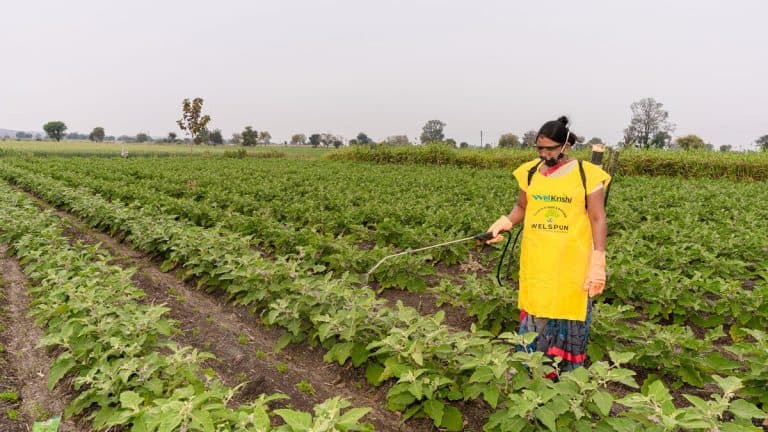
PI Industries Ltd (BOM:523642) told its fiscal Q1 2027 earnings call that domestic volumes grew 12% and biologicals sales rose 50%, while export revenue declined and spending on new growth platforms stayed heavy.
PI Industries Ltd (BOM:523642) used its fiscal first-quarter 2027 earnings call to draw a sharp line between two halves of its business. The Indian agrochemicals maker reported 12% volume growth in its domestic operations and a 50% surge in biologicals, while conceding that exports — historically the engine of the company — declined in the period. Management framed the quarter as one of continued heavy investment in what it calls future growth platforms.
That combination is the whole story. A company with a strong home market and a weak export book is a company in transition, and the market’s job is to work out whether the transition is being funded out of profits or out of patience.
What the quarter actually said
Three numbers carried the call, as reported by GuruFocus: 12% domestic volume growth, a 50% increase in biologicals, and a decline in exports. Note the construction of the first figure. Volume growth is not revenue growth. When an agrochemical company leads with volumes, it usually means realisations — the price per unit actually collected — are not doing the same work. Indian crop protection pricing has been under pressure across the industry, so a 12% volume print can coexist with far more modest value growth.
The biologicals figure is the one that will draw attention from anyone tracking the sector’s direction of travel. Biologicals — crop inputs derived from living organisms or natural compounds rather than synthesised molecules — are the fastest-growing category in global crop protection because regulators in Europe and elsewhere keep narrowing the list of permitted conventional actives. A 50% increase is a strong growth rate, but growth rates that high almost always sit on a small base. Until PI discloses biologicals as a reported revenue line with a rupee figure attached, the percentage tells you about trajectory, not about scale.
The export problem is structural, not seasonal
PI’s export business has long rested on custom synthesis and manufacturing agreements: it makes patented molecules for global innovator companies under long-term contracts. That model is highly profitable when the innovator’s product is in growth phase and highly exposed when it is not. Global agrochemical destocking — distributors and formulators working down inventory built up in earlier, tighter years — has been the dominant industry theme, and a company whose order book depends on a handful of large partners feels that faster than a diversified one.
The company did not, in the material available, quantify the export decline or attach a margin number to it. That absence matters. Export contracts in custom synthesis typically carry higher margins than domestic branded formulations, which means a shift in mix from exports toward India can dilute profitability even when total volumes rise. Investors reading the fuller disclosure should look specifically for:
- The rupee value of export revenue versus the prior comparable quarter, not just the direction.
- Gross margin by segment, or any commentary on realisation per tonne.
- Whether the export softness is described as inventory-related — which corrects — or as the loss or wind-down of a specific molecule, which does not.
- Order book or revenue visibility commentary for the remainder of fiscal 2027.
Heavy spending, and the question it raises
“Heavy investment in future growth platforms” is doing a lot of work in this quarter’s narrative. For PI, those platforms have included pharmaceutical contract development and manufacturing alongside biologicals and expanded domestic distribution. Each is a credible adjacent market. Each also consumes cash and capacity before it contributes meaningfully to earnings.
“Heavy investment in future growth platforms” is doing a lot of work in this quarter’s narrative.
The tension is straightforward. Exports, the high-margin cash generator, are shrinking. The businesses meant to replace that cash flow are early-stage. In between sits a capital expenditure and R&D programme that does not pause because a quarter came in soft. Companies navigating this sequence successfully usually show two things over four to six quarters: the declining segment stabilising at a lower base, and the new segments crossing from percentage growth into material absolute contribution. Companies that fail show the investment line rising while the growth percentages stay impressive and the rupees stay small.
There is no reason from the disclosed facts to assume PI falls into the second camp. A domestic business growing volumes at 12% while much of Indian crop protection contends with pricing pressure is a genuine operating result, and a 50% biologicals move is the right kind of growth to be reporting in 2026. But the case rests on execution that has not yet been evidenced in a reported margin.
How the tape looked on the day
The call landed on a soft session for global equities. In the United States, the S&P 500 tracker (SPY) closed at $772.67, down 0.47% from a prior close of $776.34, with a day range of $772.51 to $776.77, as of 20:00 GMT on Aug. 17, 2026. The Nasdaq 100 proxy (QQQ) finished at $729.87, off 0.16%, and the Dow tracker (DIA) at $534.19, down 0.49%. None of those moves says anything about an Indian agrochemical name, but they set the risk backdrop: broad indices drifting lower, not a tape inclined to pay up for stories that require another year of faith.
PI trades in Mumbai, where the shares are quoted in rupees and where the domestic institutional base has historically valued the company as a high-quality custom synthesis franchise rather than as a domestic formulations business. If the mix genuinely shifts toward India and biologicals, the multiple that mix deserves is a separate argument from the growth rate itself.
What would change the read
Two disclosures would settle most of the open questions. The first is a quantified export figure with management’s own attribution — destocking versus contract-specific. The second is an EBITDA margin comparison that isolates the effect of mix. Without those, the quarter reads as a set of directionally encouraging percentages sitting alongside an unquantified drag.
The wider sector context is not unfavourable. Regulatory pressure on conventional actives keeps pushing demand toward biologicals, and Indian manufacturers with existing scale and registrations are the natural beneficiaries. The risk is timing: the demand shift is measured in years, and the export shortfall is arriving now. Investors should treat the next two quarters as the test of whether PI’s investment programme is bridging that gap or simply straddling it.
Key facts
- Domestic volume growth: 12% in fiscal Q1 2027
- Biologicals growth: 50% increase reported
- Exports: Declined; amount not quantified on the call
- Market backdrop (Aug. 17, 2026, 20:00 GMT close): S&P 500 (SPY) $772.67, -0.47%
Frequently asked questions
What did PI Industries report for fiscal Q1 2027?
PI Industries Ltd (BOM:523642) reported 12% domestic volume growth and a 50% increase in its biologicals business on its fiscal first-quarter 2027 earnings call. It also disclosed a decline in export revenue and continued heavy investment in what management described as future growth platforms. The export decline was not quantified in the disclosed highlights.
Why does the export decline matter more than the headline growth?
PI’s export business is built largely on custom synthesis contracts making patented molecules for global innovator companies. That work typically carries higher margins than domestic branded formulations. So a mix shift away from exports toward India can dilute overall profitability even when total volumes are rising, which is why the unquantified export figure is the key gap.
What are biologicals in crop protection?
Biologicals are crop inputs derived from living organisms or naturally occurring compounds rather than synthesised chemistry — think microbial products, biostimulants and botanical extracts. They are the fastest-growing part of global crop protection because regulators, particularly in Europe, keep restricting conventional synthetic active ingredients, pushing demand toward lower-residue alternatives.
Does 12% volume growth mean revenue grew 12%?
No. Volume growth measures units sold, not money collected. If realisations — the price achieved per unit — are falling, revenue can grow far more slowly than volumes, or not at all. Indian crop protection has faced broad pricing pressure, so investors should look for the reported revenue figure rather than inferring it from volumes.
Where do PI Industries shares trade?
PI Industries is listed on the Bombay Stock Exchange under the code 523642 and is quoted in Indian rupees. Its shareholder base has historically been dominated by domestic institutions that valued the company primarily for its custom synthesis and export franchise rather than for its domestic formulations business.
What should investors watch in the next two quarters?
Three things: a quantified export revenue figure with management’s own explanation of the cause, segment-level margin or realisation data showing the effect of the mix shift, and evidence that biologicals and other new platforms are contributing material absolute revenue rather than just high percentage growth off a small base.
Sources
- PI Industries Ltd (BOM:523642) (Q1 2027) Earnings Call Highlights: Domestic Growth and … — GuruFocus
Photo: EqualStock IN · Pexels Licence — source