AmpliTech Revenue Jumps 51% but $50M Guidance Goes Unsaid
AmpliTech grew revenue 51% sequentially in its fiscal second quarter and widened margins, yet stopped short of standing behind its $50 million target as 5G customers push out deployments.
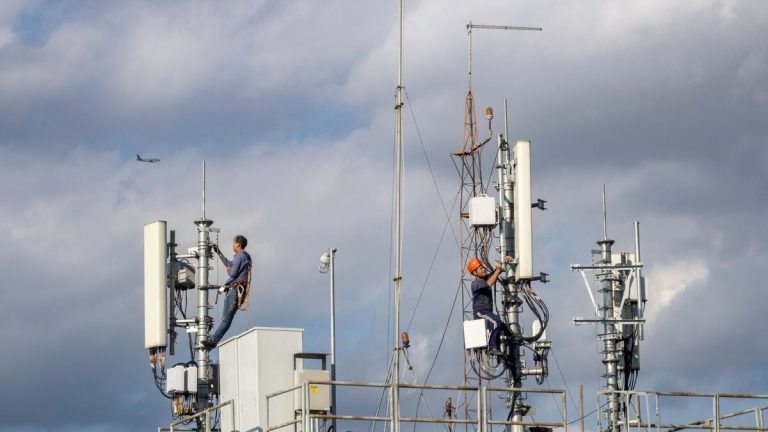
AmpliTech Group (AMPG) reported a 51% sequential rise in second-quarter fiscal 2026 revenue with margin expansion, but management declined to reaffirm its $50 million guidance, citing customer deployment delays; shares traded at 3.53, down 4.59%, as of 20:00 GMT on 18 August 2026.
AmpliTech Group Inc. (AMPG) gave investors two facts on its fiscal second-quarter 2026 earnings call that point in opposite directions. Revenue rose 51% from the prior quarter and margins expanded. And management declined to reaffirm the company’s $50 million revenue guidance, pointing to customer deployment delays.
The market chose which fact to weight. AMPG changed hands at 3.53 as of 20:00 GMT on 18 August 2026, down 4.59% on the day from a prior close of 3.70, having traded between 3.51 and 3.72. That is a session low near the close — not the shape of a chart where buyers stepped in on the growth number.
A 51% sequential jump that raised more questions than it answered
Sequential growth of that magnitude is unusual for a company of AmpliTech’s size, and it normally reads as a straightforward positive: orders converted, product shipped, revenue recognised. Paired with margin expansion, it suggests the mix shifted toward higher-value work rather than being bought with discounts.
But sequential comparisons are the least stable measure a small-cap can offer. When quarterly revenue is lumpy and driven by a handful of customer programs, a single shipment window landing on one side of a quarter-end produces a percentage move that says more about calendars than about demand. That is precisely the dynamic management invoked when it explained why it would not stand behind the annual number: the timing of customer deployments has moved.
So the same underlying condition — revenue arriving in uneven lumps tied to specific customer build-outs — produced both the headline growth rate and the reason the full-year target is now in question. Investors are being asked to treat one as signal and the other as noise, and the tape suggests they are not willing to.
Why withholding guidance hits harder than cutting it
There is a hierarchy in how markets read guidance behaviour. Reaffirming is neutral. Cutting is bad but at least resets expectations to a number analysts can model. Declining to address the figure at all is the most corrosive option, because it removes the anchor without supplying a replacement.
For AmpliTech, the $50 million figure had become the shorthand for the investment case. Without it, the range of defensible outcomes widens in both directions, and a widening range in a small-cap with concentrated revenue tends to be priced as downside. Every model built on that target now needs a haircut of a size nobody has been told.
The reason given matters too. Deployment delays are, in principle, a timing problem rather than a demand problem — the orders exist, the customer has not yet pulled them. That framing is genuinely better than lost business. The difficulty is that it is unfalsifiable in the short term. Revenue that slips a quarter and revenue that never arrives look identical until the quarter after next. Management’s credibility, not the accounting, is what bridges the gap, and the share price move indicates the bridge is carrying less weight than it did.
The 5G build-out cycle is setting the clock
AmpliTech supplies components for the higher end of the radio-frequency chain, and its fortunes are tied to how quickly network operators and their integrators actually build. That is a decision made in someone else’s capital budget, on someone else’s schedule, and small suppliers sit at the end of that whip.
Operators have been disciplined about capital spending, sequencing deployments to match subscriber revenue rather than racing to build ahead of it. When a carrier or an integrator slides a phase into the next fiscal period, the effect on a supplier whose annual revenue target sits in the tens of millions is immediate and disproportionate. The GuruFocus account of the call frames the guidance withdrawal squarely in those terms.
Operators have been disciplined about capital spending, sequencing deployments to match subscriber revenue rather than racing to build ahead of it.
The margin expansion is the part of the print that is hardest to dismiss. Structurally better gross margins, if they hold as volumes move around, mean each future dollar of deferred revenue is worth more when it eventually lands. It does not solve the timing problem, but it changes what recovery looks like.
Context: a bad tape for speculative growth
AmpliTech’s decline came on a day when risk appetite was thin across the board. The Nasdaq 100 proxy QQQ fell 1.69% to $717.51, the S&P 500 tracker SPY slipped 0.68% to $767.45, and the Dow proxy DIA was down 0.24% at $532.91. Small-cap technology names with unresolved guidance are the last thing bid in a session like that.
Still, AMPG’s 4.59% drop outpaced all three benchmarks, so this was company-specific news finding an unhelpful backdrop rather than pure market drift.
What determines the next re-rating
Three things would move the story:
- A restored number. Any reaffirmation of the $50 million target, or a formal replacement figure, removes the informational vacuum that is currently doing the damage.
- Evidence the deferred work is still contracted. Backlog or order-book disclosure would let investors distinguish delay from cancellation without waiting two quarters.
- Durability of the margin gain. If the wider margin persists through a weaker revenue quarter, it is structural. If it compresses, it was mix.
Until at least one of those arrives, AmpliTech trades as an option on someone else’s capital expenditure schedule. The 51% sequential jump proves the company can convert when customers are ready. The withheld guidance is management conceding it cannot say when that will be next.
Key facts
- AMPG last trade: 3.53, -4.59% on the day, as of 20:00 GMT 18 Aug 2026
- Sequential revenue growth: 51% in fiscal Q2 2026
- Guidance status: $50M full-year target not reaffirmed
- Reason cited: Customer deployment delays (5G timing shifts)
Frequently asked questions
What did AmpliTech report for its fiscal second quarter of 2026?
AmpliTech Group reported that revenue rose 51% sequentially in fiscal Q2 2026, alongside margin expansion. However, on the earnings call management declined to reaffirm the company’s $50 million revenue guidance, citing delays in customer deployments. The combination of strong sequential growth and an unaddressed annual target defined the market’s reaction.
Why did AMPG shares fall despite the revenue growth?
Investors focused on the guidance rather than the growth. Declining to reaffirm the $50 million target removes the anchor analysts use to model the year without replacing it, which widens the range of possible outcomes. AMPG traded at 3.53 as of 20:00 GMT on 18 August 2026, down 4.59% from a prior close of 3.70.
What are customer deployment delays and why do they matter here?
Deployment delays mean AmpliTech’s customers — network operators and integrators building out 5G infrastructure — have pushed back the timing of their build phases. Because AmpliTech’s annual revenue is concentrated in a handful of programs, a single phase sliding into a later period can materially change a quarter or a full-year result.
Is withholding guidance worse than cutting it?
Often, yes. A cut is negative but supplies a new number investors can model against. Declining to address guidance at all removes the reference point without providing a substitute, so the market prices in an unknown reduction. For small companies with concentrated revenue, that uncertainty typically gets discounted toward the downside.
What does the margin expansion tell investors?
Margin expansion alongside revenue growth suggests the increase was not bought through discounting and that the revenue mix shifted toward higher-value work. If wider margins persist through a weaker revenue quarter, they are likely structural rather than a mix effect, which would make each dollar of deferred revenue more valuable when it eventually arrives.
How did the broader market perform on the same day?
Risk appetite was weak. As of 20:00 GMT on 18 August 2026, the Nasdaq 100 proxy QQQ was down 1.69% at $717.51, the S&P 500 tracker SPY fell 0.68% to $767.45, and the Dow proxy DIA slipped 0.24% to $532.91. AMPG’s 4.59% decline exceeded all three.
Sources
- AmpliTech Group Inc (AMPG) (Q2 2026) Earnings Call Highlights: Revenue Surges 51% Sequentially, … — GuruFocus
Photo: Barbara Reis · Pexels Licence — source