Breville Tops $1.8 Billion in Sales as Tariff Shift Pays Off
Breville reported record FY 2026 revenue above $1.8 billion, saying new-market growth and a diversified factory footprint absorbed tariff costs. Shares jumped 6.79%.

Breville Group Ltd (OTC: BVILF) told its FY 2026 earnings call it delivered record revenue of more than $1.8 billion, with growth in new markets and a diversified manufacturing base offsetting tariff pressures; the shares traded at 24.70, up 6.79%, as of 13:32 GMT on 19 August 2026.
Breville Group Ltd (OTC: BVILF), the Australian-listed maker of espresso machines, toaster ovens and other premium kitchen appliances, used its FY 2026 earnings call to report record revenue of more than $1.8 billion, crediting growth in newly entered markets and a reworked manufacturing footprint that absorbed tariff costs rather than passing all of them to shoppers.
Investors responded quickly. The shares changed hands at 24.70 as of 13:32 GMT on 19 August 2026, up 6.79% from the previous close of 23.13, with the day’s range printing flat at 24.70 on both ends — a pattern typical of a thinly traded over-the-counter line for a foreign-listed company, where a single block can set the day’s price. That move stands out against a quiet broad market: the S&P 500 proxy SPY was $770.47, up 0.39%, the Nasdaq 100 proxy QQQ $720.24, up 0.38%, and the Dow proxy DIA $534.35, up 0.27%.
What the record revenue line actually tells you
A revenue record is the easiest number for a consumer-durables company to publicise and the hardest to interpret without the accompanying margin detail. Breville sells discretionary hardware at premium price points — the kind of purchase households defer when real incomes tighten. Clearing $1.8 billion in a year when tariffs were an active cost headwind implies the company held its pricing architecture rather than discounting its way to volume, though the company’s own commentary on the call is the only guide the market has so far on how much of that top line survived to profit.
The framing management chose — new markets plus manufacturing diversification — is worth reading carefully. Those are two different growth engines with two different risk profiles. New-market entry buys revenue but consumes cash: local marketing, distributor margin, service networks and inventory in currencies that may not match the cost base. Manufacturing diversification, by contrast, is a defensive move that protects the gross margin already earned. Companies that lean on both at once are usually telling shareholders that the growth is being funded, not bought.
Why the factory footprint matters more than the sales record
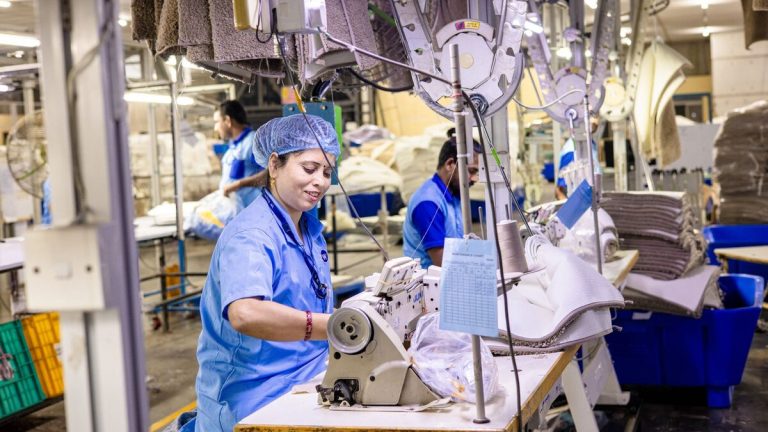
The single most consequential disclosure in the lead is not the revenue figure but the claim that manufacturing diversification offset tariff pressures. For appliance makers, tariffs land directly on landed cost, and there are only four ways to respond: raise prices, compress margin, renegotiate with suppliers, or move production. The first risks volume in a discretionary category. The second risks the multiple. Moving production is the slowest and most capital-intensive option, but it is the only one that changes the structural exposure.
By saying the diversification worked, Breville is claiming it has already spent that money and is now collecting the benefit. If accurate, the implication for future earnings is that a further escalation in duties would hurt less than it would have a year or two ago — and that a de-escalation would show up as clean margin upside rather than being competed away. That optionality is what a market pays a premium for in a hardware business.
The offsetting consideration is duplication. Running more than one production geography for the same product families almost always means carrying more inventory, more tooling and more overhead than a single-source model. Those costs sit in gross margin and in working capital, and they do not disappear when the tariff threat recedes. The question for the next reporting period is whether the diversification premium is a permanent line in the cost base or a transitional one.
New markets, and the arithmetic of geographic mix
Breville’s growth story has for several years rested on taking a product range proven in Australia, New Zealand and North America into additional territories. Each new country adds revenue at a lower initial margin than mature markets, because scale in distribution and brand awareness have not yet been built. A company reporting record group revenue while simultaneously expanding geographically is therefore likely to show a mix effect: rising sales, with blended margin dragged by the newest regions.
Breville’s growth story has for several years rested on taking a product range proven in Australia, New Zealand and North America into additional territories.
That is not a warning sign in itself — it is how consumer-brand expansion looks on the way up. What matters is the trajectory of the older new markets. If territories entered several years ago are now converging on group-average profitability, the model is working and the drag is temporary. If they are not, the company is buying revenue at a structurally worse margin than its home markets deliver. The regional segment detail in the full FY 2026 accounts, rather than the call highlights summarised by GuruFocus, is where that answer lives.
How US investors should treat the BVILF line
BVILF is the over-the-counter representation of an Australian-listed company. That has three practical consequences. Liquidity is thin, so intraday prices — including today’s 6.79% gain on a range that opened and closed at 24.70 — can reflect very little turnover. Pricing lags the primary market, meaning the reaction US holders see is often a delayed echo of what happened on the home exchange after the result landed. And the underlying earnings are reported in a currency that is not the US dollar, so a portion of any total return comes from the exchange rate rather than the business.
None of that argues against owning the exposure, but it does argue for reading the primary listing rather than the OTC tape as the real scoreboard. A double-digit percentage move on an OTC line for a foreign issuer is a fact about the quote, not necessarily about the market’s considered verdict.
The next data points that matter
Three things would move the analysis from encouraging to confirmed. First, the split of the record revenue by region, which will show whether the new markets contributed growth or merely activity. Second, the gross margin trend alongside any commentary on how much tariff cost was absorbed versus recovered in price — the difference between a company protecting its customer and one protecting its P&L. Third, working capital: a manufacturer running multiple production geographies should be expected to carry more inventory, and whether that has been financed out of operating cash flow or the balance sheet tells you how comfortable the expansion really is.
For now, the shape of the result is straightforward. Breville sold more than it ever has, kept expanding into new territories, and says the tariff problem it faced was blunted by decisions it took on where to build its products. Whether that reads as durable margin defence or as a costly workaround will be settled by the detail behind the headline, not the headline itself.
Key facts
- FY 2026 revenue: Record, more than $1.8 billion
- BVILF price: 24.70, +6.79% as of 13:32 GMT, 19 Aug 2026
- Previous close: 23.13; day range 24.70–24.70
- Stated growth drivers: New-market expansion and manufacturing diversification offsetting tariffs
Frequently asked questions
How much revenue did Breville report for FY 2026?
Breville Group reported record revenue of more than $1.8 billion for fiscal 2026, disclosed on its FY 2026 earnings call. The company attributed the result to growth in newly entered markets and to a diversified manufacturing footprint that offset tariff pressures. Detailed regional and margin breakdowns sit in the full accounts rather than the call highlights.
How did BVILF shares react?
BVILF traded at 24.70 as of 13:32 GMT on 19 August 2026, up 6.79% from a previous close of 23.13. The day range printed at 24.70 on both the high and the low, which is common for a thinly traded over-the-counter line where a small number of transactions can set the quoted price for the session.
What does manufacturing diversification mean here?
It means producing the same or similar goods across more than one country or supplier base rather than relying on a single location. For an appliance maker facing tariffs, that spreads the duty exposure and can protect gross margin. The trade-off is duplicated tooling, overhead and inventory, which raise costs and working capital needs.
Why do tariffs matter so much for Breville?
Tariffs are applied to imported goods and land directly in the landed cost of each unit. For a premium kitchen appliance brand, the options are raising prices, absorbing the cost in margin, pressing suppliers, or shifting production. Because the products are discretionary, price increases risk volume, which makes production shifts the more durable fix.
Is BVILF the company’s main listing?
No. BVILF is the over-the-counter representation of an Australian-listed company. US quotes tend to lag the home market, liquidity is thinner, and reported earnings are in a non-US currency, so exchange rate movements affect returns for dollar-based holders independently of how the underlying business performs.
What should investors watch next?
Three items: the revenue split by region, which shows whether new markets delivered profitable growth; the gross margin trend and how much tariff cost was absorbed rather than recovered in price; and working capital, since running multiple production geographies usually requires carrying more inventory than a single-source model does.
Sources
- Breville Group Ltd (BVILF) (FY 2026) Earnings Call Highlights: Record Sales and Strategic … — GuruFocus
Photo: 🇻🇳🇻🇳 Việt Anh Nguyễn 🇻🇳🇻🇳 · Pexels Licence — source