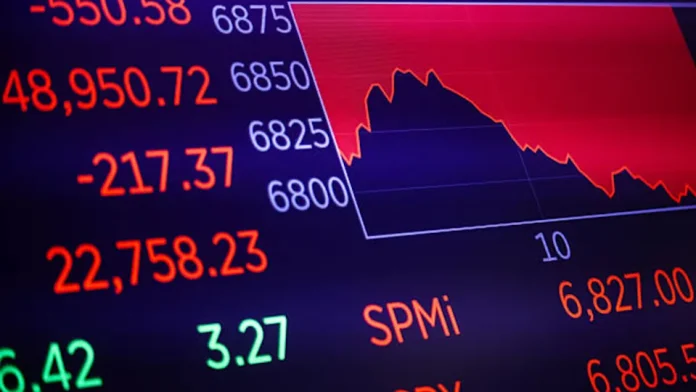
(Bloomberg) — All across Wall Street, day by day, the headlong rush into the most popular trades, from tech stocks to gold to cryptocurrencies, has given way to a sudden retreat from risk.
There’s been no single cause, like there was last April when President Donald Trump’s trade war sent markets into a fearful tailspin. Instead, it’s been a slow drumbeat of news that is sowing anxiety about valuations that many suspected had already run up too far — and causing investors to pull back all at once.
That was clear again on Thursday, when the S&P 500 slid 1.2%, its third straight daily decline, and the Nasdaq 100 extended its deepest slide since April. Software stocks extended their tumble after artificial-intelligence startup Anthropic rolled out a new model that’s designed to carry out financial research, the second time this week the company has jolted markets, underscoring the competitive threat from the new technology.
Silver — which had tracked gold to record highs — cratered 20%. Bitcoin dropped more than 13%, erasing all of the gains seen since Trump’s election 15 months ago, as investors unwound money-losing trades financed with borrowed money. US Treasuries rallied, resuming their usual role as a haven of last resort. And after the closing bell, Amazon.com Inc. plunged more than 11% when it said it plans to invest $200 billion this year, far more than the amount forecast by analysts who’ve grown increasingly concerned that tech companies are overspending on AI.
Those jitters spilled into Asia as markets opened, with South Korean stocks sinking over 5% at one point and chipmakers Samsung Electronics Co. and SK Hynix Inc. leading the slide. Shares across the region fell about 1% in early trading, while futures tied to the Nasdaq pointed to further losses ahead.
“People are definitely going more defensive,” said Brian Frank, president and portfolio manager at Frank Funds. “It’s more of like a shoot first and ask questions later type environment.”
The recent activity marks a strong shift from the mood on Wall Street heading into the year, when strategists were predicting that stocks were poised for the longest winning streak in nearly two decades. The forecasts rested on expectations that the AI boom would continue, the surprisingly resilient economy would keep bolstering corporate profits and that the Federal Reserve would dial down interest rates.
That outlook remains largely in place, as evidenced by the solid earnings reports that have been rolling out in recent weeks. But there’s also been a renewed focus on some of the mounting risks: The companies that will be displaced by the AI boom; questions about the direction of the Fed if Trump’s pick, Kevin Warsh, is confirmed as Jerome Powell’s replacement as chair; and stretched valuations — on assets like gold, Bitcoin, or even tech giants like Alphabet Inc. — that may not be sustainable in the long run.
Fresh labor-market data also added to the pressure on markets Thursday. New figures from Challenger, Gray & Christmas Inc. showed companies announced the largest number of job cuts for any January since the depths of the Great Recession in 2009, adding to concerns that economic momentum may be starting to crack.
The reversal was most dramatic for Bitcoin. After a meteoric rise for much of last year as Trump’s victory set off a speculative rush into cryptocurrencies, the market for such tokens has tumbled sharply this month as investors yanked out cash.
On Thursday, the selloff in Bitcoin deepened as the trading day wore on, dragging down other tokens, exchange-traded funds and the treasury companies like Strategy Inc. that hold vast sums of coins. By late afternoon in New York, it had slumped 13% to just over $63,000, wiping out roughly half its value since it hit a record high four months ago.
“The fear and uncertainty across the market is evident,” said Chris Newhouse, head of business development at Ergonia.
In the stock market, the drop was more subdued. Yet the pressure was broad based, with nine of 11 major industry groups in the S&P 500 retreating. In addition to the worries about which companies will wind up on the losing end of AI technology, investors have been worried about whether the massive investments in the technology will wind up paying off. That was evident in the drop by Google’s parent, Alphabet, which slipped after outlining an ambitious spending plan even as revenue beat estimates.
Kim Forrest, chief investment officer at Bokeh Capital Partners, said the recent retreat is a reflection of the worries that the hottest stocks and the other assets, like gold, had simply run-up too far and were due for a little reckoning.
“It’s a reset,” she said. “Momentum may have just strung itself out.”