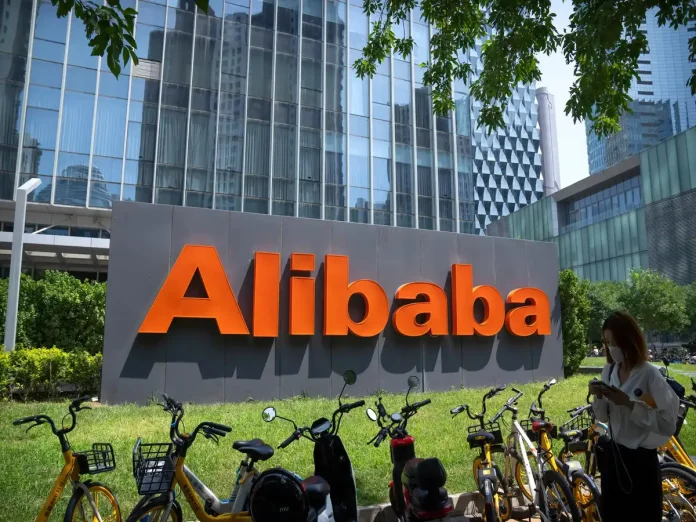
Alibaba has pushed further into the global race for agentic artificial intelligence, with its international commerce division launching Accio Work, a plug‑and‑play “AI taskforce” it says can autonomously run complex business operations for small and medium-sized enterprises.
The launch comes amid a boom in China around agentic AI triggered by OpenClaw, which has consumers ranging from students to retirees racing to join the “lobster raising” trend, prompting companies to rush out OpenClaw‑based tools and fuelling mounting security concerns.
Accio Work marks a contrast with the consumer-driven frenzy, with the company saying it deploys cross‑functional AI teams requiring no coding or setup.
“We distinguish ourselves by being a specialized B2B tool rather than a generalist platform,” Alibaba International Vice President Kuo Zhang said. “We draw a very clear line at high-stakes operations … any action involving financial transactions, payment execution, or access to private files requires explicit, granular permission from the user.”
The launch comes less than a week after another Alibaba division introduced Wukong, an enterprise-focused agentic AI platform that can coordinate multiple AI agents to perform complex business tasks, including document editing, spreadsheet updates, meeting transcription and research, within a single interface.
Alibaba also said last week it would separate its AI businesses from its cloud computing arm. The newly formed Alibaba Token Hub business group, led by Chief Executive Eddie Wu, is the clearest indication yet that the company is shifting its focus to digital assistants powered by AI models that use far more tokens — units of data used to generate language — than traditional Q&A chatbots.
Zhang said the high-stakes global push to define agentic AI carries inherent risks that can only be mitigated with controlled, specialised models that balance automation with security.
“We believe the greatest risk lies in using horizontal, generalist models for vertical business tasks. By focusing on specialized B2B agents and implementing AI alongside human approval layers, we can deliver the benefits of an autonomous workforce without the traditional risks associated with unconstrained AI,” he said.