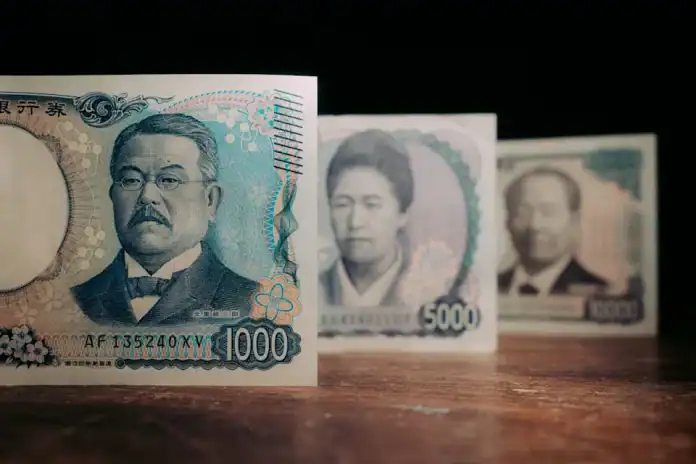
The yen extended its slide beyond 160 per dollar to its weakest mark this year, fueling risk that Japanese officials may step into the market to offer support.
The currency’s decline will heighten concern among Japanese policymakers. Earlier this week, Minister of Finance Satsuki Katayama said authorities are standing by to respond to foreign-exchange moves as needed around the clock as Tokyo remains on high alert over speculative moves.
Since the Bank of Japan’s April meeting earlier this week, at which Governor Kazuo Ueda refrained from providing a clear sign concerning the timing of the central bank’s next interest-rate hike, the yen has been under pressure.
Following the conclusion of the Federal Reserve’s policy meeting Wednesday, the currency fell about 0.5% to 160.47 per dollar, its weakest level since mid-2024. It pared some of its losses on Thursday, climbing as much as 0.2% to 160.08 against the greenback.
Authorities intervened in the market several times in 2024 when the yen weakened beyond the 160-per-dollar mark, though officials have repeatedly emphasized that they are focused on excessive volatility rather than defending specific rates.
“We believe intervention is likely to materialize ahead of the cycle high of 162” in the dollar-yen pair, said Ikue Saito, a strategist at JPMorgan.
The finance minister has not officially commented on the yen so far Thursday.
At the conclusion of the Fed’s two-day meeting in Washington, officials led by Chair Jerome Powell left interest rates unchanged but signaled a widening gulf regarding the outlook for policy given shocks to energy and inflation amid the war in the Middle East.
Investors remain on edge as the US and Iran vie for control of the Strait of Hormuz. The uncertainty has supported the dollar and kept oil prices elevated, adding to inflation in Japan while also raising downside risks to growth. President Donald Trump on Wednesday said he will not lift a naval blockade of Iran’s ports until he secures a deal with Tehran to address the country’s nuclear program, Axios reported.
What Bloomberg Strategists Say…
“Firm US yields and elevated oil prices are underpinning the dollar bid, and the yen looks vulnerable to a squeeze if that range high gives way. With the FOMC decision due later today, timing risk is high and any hawkish tilt could accelerate the move and trigger stops above the range.”
-Brendan Fagan, Markets Live strategist. For the full note, click here.
At UBS Global Wealth Management, strategists including Teck Leng Tan and Dominic Schnider lowered their forecasts for the yen, in part because of the impact of higher-for-longer oil prices on Japan’s balance of payments and what they expect will be a “cautious” Bank of Japan tightening path.
Traders also slashed their swaps market bets that the BOJ will tighten monetary policy come June. They’re now pricing a sub-50% chance of a hike, compared to a peak of some 68% last week.
“The odds of direct intervention should rise if USD/JPY quickly traded up to 163-164,” Karen Reichgott Fishman, a strategist at Goldman Sachs Group Inc., wrote in a note. “That said, we think the yen and Japanese government bonds are trading in line with fundamentals, with downward pressure from rising inflation and constrained policy.”
Beyond current levels, 161.95 looms large as a potential milestone for weakness given it’s the nadir for the yen reached in 2024. Breaking that level would take the currency back to where it traded in 1986.