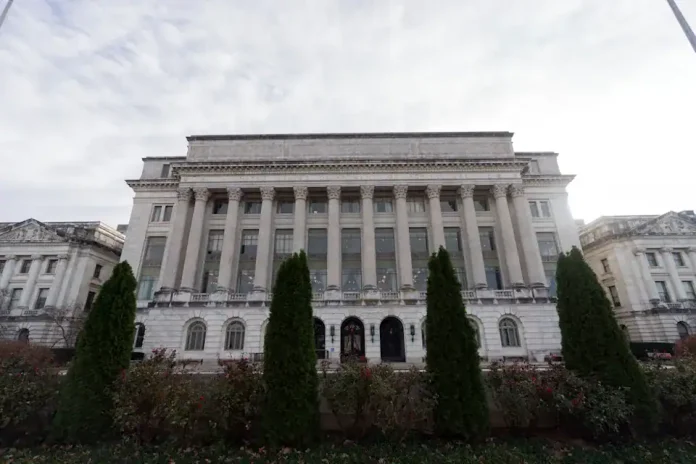
A $7 billion corner of the mortgage world ground to a halt when the government shut down last week, leaving homebuyers and sellers in limbo just before they were set to close.
Most types of mortgage lending, including government-guaranteed mortgages such as FHA and VA loans, are continuing as normal throughout the shutdown, with one exception: US Department of Agriculture loans, which tens of thousands of low- and middle-income homebuyers use each year to purchase homes.
With most of the USDA’s staff furloughed, processing of those loans has stopped.
USDA loans are designed to support affordable housing in rural communities and are either guaranteed or directly issued by the federal government. They have geographic restrictions that limit their use to rural and some suburban areas, as well as income caps. Features like a no-money-down option, low fees, and looser credit score requirements make them popular with first-time homebuyers.
Julia Adame, a mortgage lender in Yukon, Okla., has two clients whose loans got stuck in final processing steps just before they were set to close on their homes. One, who was originally scheduled for a Sept. 30 closing, the day before the government shut down, is now paying her seller $150 a day to compensate for the delay.
“Here we are, lingering on, waiting for the government to reopen to get their USDA commitment letter and close,” Adame said.
Processing halts
The loans the USDA guarantees were caught in the shutdown’s dragnet because they contain an extra processing step that VA and FHA loans lack: After a prospective borrower receives conditional approval for a USDA loan from their underwriter, their loan application must go to the USDA for a final review to ensure they and their home meet the program’s strict eligibility requirements.
Those reviews, and the loans the USDA makes directly, are on hold until the government reopens. More than 80% of employees in the division responsible for the loans are now furloughed, and the skeleton crew that remains is conducting “certain limited activities that are viewed as ‘excepted’ for the purpose of preserving the Government’s property.”
The delays are largely hurting rural Americans, who have some of the highest homeownership rates in the US. However, like the rest of the country, those rates have dropped in recent years as wages failed to keep up with home price appreciation. Around 74% of people in rural areas owned their homes in 2023, down from 81% a decade earlier.
Spencer S., who asked that his last name be withheld to protect his privacy, spent three months house hunting outside of Atlanta. The process was frustrating: He and his wife were beat out by all-cash offers on several homes. Then their offer was accepted on a “nice cozy bricky house” in the small city of Winder, Ga.
They opted for a 6% USDA loan after quotes for an FHA loan and a mortgage from a local bank came back in the 6.75% to 7% range. Spencer, 24, and his wife were moving toward a late-October closing date when the shutdown began.
Now, they’re waiting. So far, their seller has been willing to accommodate the delay. But he’s worried that something could go wrong if the shutdown drags on. “This is the first home we found where the seller is interested in giving us the home and we could finally get the loan process started, but here we are today,” he said.
$7 billion business
In the 2024 fiscal year, the USDA backed $6.1 billion of mortgage debt across 33,000 loans and lent another $1 billion directly under a program for low- and very-low-income buyers. It’s a small part of the market compared to other government-guaranteed options like FHA and VA loans, both of which amount to hundreds of billions of dollars annually. But mortgage lenders say the USDA option remains popular, especially for buyers with limited down-payment funds.
“It’s a great product, and it’s very flexible too,” said Adame, who often works with buyers in rural parts of Oklahoma. Twenty minutes outside the Oklahoma City metro area, buyers can find USDA-eligible homes on several acres of land for under $350,000.
Cameron Watson of the Lariscy Watson Mortgage Team in Savannah, Ga., said her USDA business has been growing in recent years as buyers moved farther outside the city in search of more affordable homes.
Since the shutdown began, she’s been fielding questions from worried buyers and advising her clients to “plan for the worst and hope for the best,” with a worst-case scenario being something similar to the 2018-2019 shutdown, which lasted a record 35 days.
Planning means staying in close contact with their real estate agent, getting contracts and contingencies extended where possible, and completing the lending process so their loan is near the top of the USDA’s backlog when the government reopens.
Some buyers might be able to turn to other types of loans if the shutdown drags on. Adame often tries to get qualifying buyers approved for both USDA and FHA loans. But USDA loans are often the preferred option for buyers because their fees are often lower than FHA loans’ mortgage insurance requirements, and they don’t require a down payment. Adame’s buyer, who is paying a seller $150 a day for closing delays, is holding out in hopes of using a USDA loan, because she’ll save around $80 a month for the life of the mortgage.
So far, Watson said, sellers in greater Savannah have been willing to work with buyers whose loans are stuck. Most aren’t eager to start the marketing process over again.
“This is out of everybody’s control,” Watson said. “It isn’t the fault of the buyer. It isn’t the fault of the seller. I think in most cases, sellers are compassionate and understand.”