Microsoft earnings report on deck with stock slide, Azure growth, and OpenAI deal hanging over company
Microsoft (MSFT) will report its third quarter results after the bell on Wednesday as Wall Street looks for signs that the company can keep up with AI demand and steady its position in the artificial…
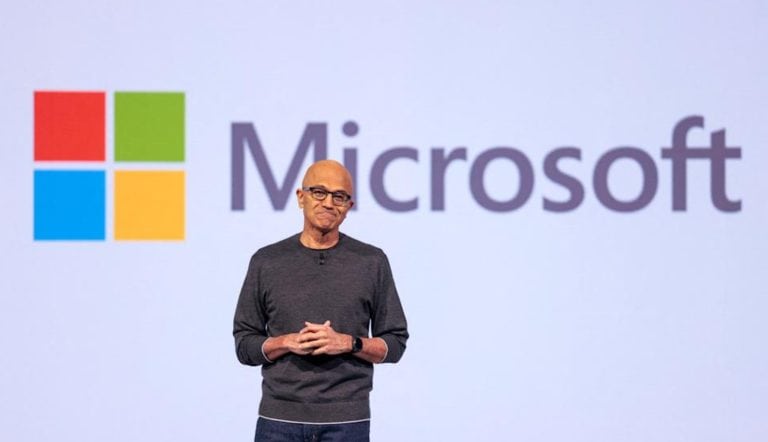
Microsoft (MSFT) will report its third quarter results after the bell on Wednesday as Wall Street looks for signs that the company can keep up with AI demand and steady its position in the artificial intelligence race.
Microsoft’s stock has plunged in recent months on concerns about its Azure and AI growth. In its last quarter, Microsoft reported 38% growth in its Azure business but said it would have reached 40% if not for capacity constraints.
This concern, as well as questions about Copilot adoption, risks to Microsoft’s enterprise software business, and its relationship with OpenAI, has hung over the business in recent months, with its stock down over 20% in the last six months and serving as a laggard among its “Magnificent Seven” peers.
For the quarter, Microsoft is expected to report earnings per share of $4.04 on revenue of $81.46 billion, according to Bloomberg analyst consensus estimates, up from the same period last year when it saw EPS of $3.46 and revenue of $70.06 billion.
The company’s Productivity and Business Processes segment is expected to generate $34.48 billion, while the Intelligent Cloud business is expected to see $34.31 billion.
Azure revenue is expected to increase 38.24%.
“We believe Azure growth remains gated by capacity delivery rather than demand, with [data center] buildout and regional expansions, expected to add incremental AI capacity toward the end of FY26,” Bank of America Global Research analyst Tal Liani wrote in an investor note ahead of Microsoft’s earnings.
“For the stock to go up, we believe the company would need to beat the Azure growth expectations,” he added.
“For the stock to go up, we believe the company would need to beat the Azure growth expectations,” he added.
Microsoft provided Wall Street with an update on its highest-profile AI relationship on Monday, saying that it reworked its agreement with OpenAI (OPAI.PVT) and will no longer have to make revenue-sharing payments to the AI startup, while OpenAI will continue making payments to Microsoft.
But the tech giant has also lost exclusive access to OpenAI’s intellectual property and AI models. Though it will still have access, OpenAI can also share its data with other companies. OpenAI will also be able to serve its products across cloud partners, rather than just on Azure.
On the PC front, Wall Street expects Microsoft’s More Personal Computing segment to decline 5.4% to $12.64 billion. The PC industry is dealing with the impact of the global memory shortage caused by the worldwide data center build-out.
That’s forcing some manufacturers to raise PC prices or eliminate certain low-cost models, cutting into overall sales. According to the International Data Corporation, global PC shipments are expected to fall 11.3% this year.
There are also questions about Copilot adoption among Microsoft’s customers. Wall Street was lukewarm on the company’s numbers last quarter and is looking for them to improve in Q3.
TD Cowen analyst Derrick Wood, however, said his firm is seeing positive signs for Microsoft.
“Our survey of nearly ~700 productivity and collaboration software purchase decision-makers in the US painted a constructive picture of the M365 Suite upgrade/ Copilot purchase intentions,” Wood wrote in a note to investors.
“79% of M365 users are either somewhat (41%) or very likely (38%) to upgrade within the next 12-18 months, an uptick from our last survey in ‘23,” he added.