A surge in electricity demand from artificial intelligence and data centers is reshaping North America’s power markets, creating a “renaissance” for natural gas after decades of limited new development, according to KKR & Co. partner Brandon Freiman.
The power sector has moved from years of flat demand into a new growth cycle, with AI emerging as one of the clearest drivers, Freiman, who is also head of North American infrastructure at KKR, said during the Sohn Montreal investment conference on Thursday.
Publicly traded power producers such as Vistra Corp., Constellation Energy Corp., NRG Energy Inc. and Talen Energy Corp. have already benefited from owning merchant generation in a market where electricity demand and prices are rising, he said on panel with executives from Blackstone Inc., Caisse de Depot et Placement du Quebec and PSP Investments.
“It’s become one of the clearer ways to express an AI bet on infrastructure,” Freiman said. Investors do not need to pick the winning AI model or semiconductor company, he added: “They’re going to need more power.”
The next phase, however, will be more capital intensive. Freiman said new gas-fired plants that once cost about $1,000 per kilowatt can now cost closer to $3,000 per kilowatt, making it unlikely that developers will build without long-term contracts. That shift is expected to pull more activity into private markets, where large infrastructure investors can finance projects backed by hyperscalers and other major customers.
“If you look at industries going through an inflection where there’s just a massive need for capital, it’s really hard to do that in public markets,” he said.
Unlike previous power booms, however, investors are showing little appetite for speculative construction. Robert Horn, senior managing director and global head of infrastructure at Blackstone Credit and Insurance said most new gas-fired projects are being backed by long-term contracts with utilities, industrial customers and technology giants such as Amazon.com Inc., Microsoft Corp., Alphabet Inc.’s Google and Meta Platforms Inc., providing predictable revenue before construction begins.
That marks a sharp departure from the merchant power cycle of the early 2000s, when developers built plants in anticipation of demand and were left exposed when electricity prices fell. The shift has made the sector particularly attractive to private-credit providers and infrastructure investors, who are increasingly willing to finance projects supported by some of the strongest corporate balance sheets in the world.
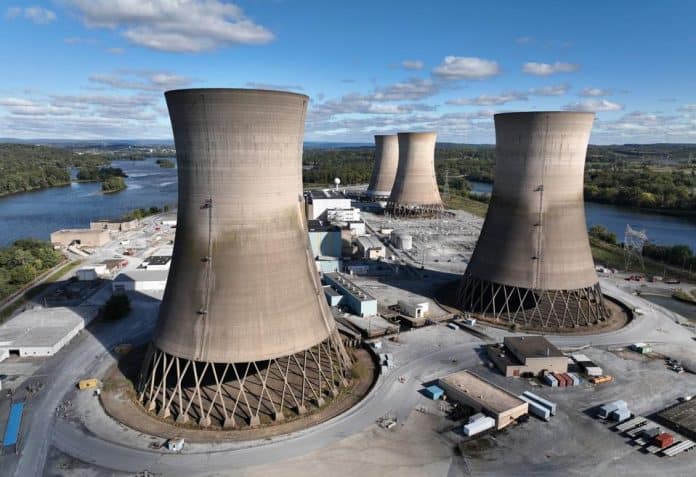
The panelists also pointed to nuclear power as a likely long-term winner, though not an easy one for private capital. Freiman said there “will be a nuclear renaissance at some point,” but the early wave will probably need to be financed by the US government or hyperscalers, whose balance sheets are large enough to absorb the risks. Recent nuclear projects have suffered from major delays and cost overruns, making investors cautious, he added.