Olvi's Belarus Engine Offsets Deal Costs as ADR Sinks 5.8%
Olvi's Q2 2026 call paired strong Belarus growth and better cash flow with integration costs and Danish turnaround trouble. The ADR fell 5.84% to €7.48 on the day.
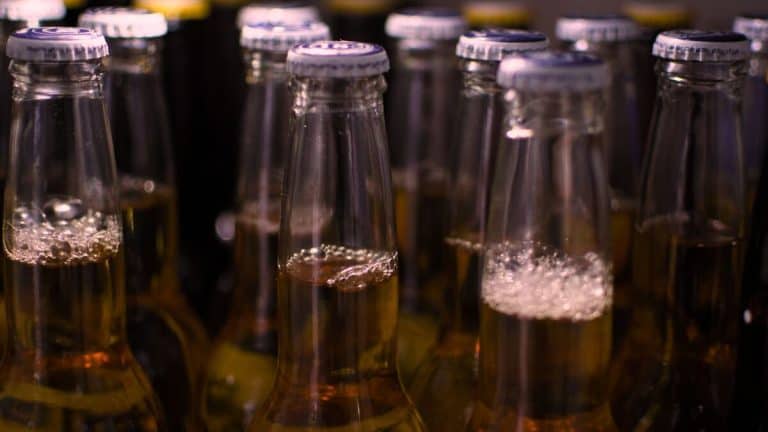
Olvi Oyj (NASDAQ: OLVOY) told investors on its Q2 2026 earnings call that robust growth in Belarus and improved cash flow were offset by acquisition integration costs and a difficult turnaround in Denmark, with the American depositary receipts trading at €7.48, down 5.84%, as of 17:46 GMT on 14 August 2026.
Finnish brewer Olvi Oyj (NASDAQ: OLVOY) gave investors a split picture on its second-quarter 2026 earnings call: the eastern part of its footprint is still doing the heavy lifting, while the cost of digesting acquisitions and fixing an underperforming Danish business is keeping a lid on the full-year outlook. The market picked the negative half. Olvi’s American depositary receipts changed hands at €7.48 as of 17:46 GMT on 14 August 2026, down 5.84% from the previous close of €7.94, and the day’s range was pinned at €7.48 on both ends — a thin, one-way session in a security that does not trade in size.
That drop of roughly €0.46 per receipt came on a day when the broad U.S. market was merely soft. The S&P 500 tracker (SPY) was off 0.29% at $775.63, the Nasdaq 100 proxy (QQQ) down 0.41% at $729.09, and the Dow tracker (DIA) down 0.27% at $536.47. Olvi’s move was therefore company-specific, not a market-wide risk-off day being absorbed by a small foreign listing.
Belarus is carrying the volume story
The single clearest positive from the call, as reported by GuruFocus, was robust growth in Belarus. For Olvi, that is not a novelty; the group’s Baltic and Belarusian operations have long provided the volume ballast that the mature Finnish home market cannot. It is also the part of the business that carries the most explanation risk for a Western shareholder base.
Strength in Belarus flatters reported growth, but it arrives with three complications that investors have learned to price. First, currency: earnings generated in a soft local currency translate unevenly into euros, so a strong volume quarter does not always convert into a proportionally strong euro contribution. Second, cash mobility: profits earned in the market are not automatically fungible with group cash needs elsewhere. Third, and least quantifiable, is the political and sanctions overlay around any Belarusian exposure, which caps the multiple some institutional funds are willing to pay for that stream of profit however reliable it looks on the volume line.
None of that makes the growth less real. It does explain why a quarter in which the fastest-growing unit is Belarus and the problem child is in Western Europe may be received more coolly than the headline arithmetic suggests.
Integration costs are the price of the buy-side strategy
Olvi flagged acquisition integration costs as a drag on the quarter. This is the recurring tension in a consolidating regional beverage industry: growth by acquisition buys shelf space, distribution and brands faster than organic investment can, but the bill arrives immediately while the synergies arrive on a lag measured in quarters, sometimes years.
Integration expense in a brewer typically clusters in a few predictable places — harmonising production and packaging lines, rationalising overlapping distribution routes, migrating IT and finance systems, and severance where back offices duplicate. Most of it is genuinely one-off. The question for shareholders is whether management can show it tapering on a defined schedule, because the difference between a transitional cost and a permanent margin problem is only visible over consecutive reporting periods.
The encouraging counterweight was cash flow, which the company said improved. In an acquisition-heavy phase, cash generation matters more than the reported earnings line, because it determines whether the balance sheet can absorb another deal or has to pause and deleverage. Better cash conversion while integration charges are still running through the income statement is the more durable signal of the two.
Denmark is the unresolved problem
Against that, the Danish turnaround was named as the reason the 2026 outlook is being tempered. Denmark is a high-cost, mature, heavily competitive beverage market with concentrated grocery buyers who hold real pricing power over suppliers. Turnarounds in that setting tend to be slow: a challenger brand cannot simply raise prices without losing listings, and volume recovery usually requires promotional spend that eats the margin recovery it is meant to fund.
Against that, the Danish turnaround was named as the reason the 2026 outlook is being tempered.
The reputational cost of a slipping turnaround is disproportionate. Belarusian growth is treated by many analysts as low-quality growth, discounted for geopolitical risk. Danish improvement, by contrast, would be exactly the kind of hard-currency, developed-market progress that supports a re-rating. When the low-quality line beats and the high-quality line disappoints, the stock tends to trade on the latter — which is a reasonable reading of Friday’s move.
What the narrowed guidance actually communicates
A narrowed full-year range is a specific kind of message. It says management now has enough visibility on the second half to shrink the band of possible outcomes, while conceding that the integration and Danish costs are real enough to keep the top of the old range out of reach. Narrowing is neither the confidence signal of an upgrade nor the alarm of a cut. It is, in practice, an admission that the upside case has been trimmed.
For the coming quarters, the checkable items are straightforward:
- Whether integration costs decline sequentially, and whether management puts a date on when they stop.
- Whether Danish volumes and margins improve without an offsetting increase in promotional spending.
- Whether the improvement in cash flow persists once working capital normalises after the seasonal summer peak.
- Whether Belarusian and Baltic growth continues to translate into euro-denominated earnings rather than being eroded in translation.
A liquidity caveat for U.S. holders
American investors should treat the OLVOY receipt for what it is: an over-the-counter proxy for a Helsinki-listed brewer, quoted in euros, with a range on the day that opened and closed at the same €7.48. A single-print range is a hallmark of very thin trading, which means the 5.84% decline reflects a small number of decisions rather than a broad revaluation by the whole shareholder base. The primary listing in Finland, where the institutional holders sit, is the better read on how the quarter was received.
The underlying business case has not changed shape this quarter. Olvi remains a regional consolidator whose growth engine sits east of its home market and whose repair job sits west of it. The 2026 outlook now hinges less on how much beer and soft drinks it sells and more on how quickly it can stop paying for the businesses it has already bought.
Key facts
- OLVOY price: €7.48, down 5.84%, as of 17:46 GMT 14 Aug 2026
- Previous close: €7.94; day range €7.48–€7.48
- Growth driver cited: Robust Belarus growth and improved cash flow
- Drags on outlook: Acquisition integration costs; Danish turnaround challenges
Frequently asked questions
What did Olvi report on its Q2 2026 earnings call?
Olvi Oyj highlighted robust growth in Belarus and improved cash flow during its second-quarter 2026 earnings call. Offsetting those positives, the company pointed to acquisition integration costs weighing on results and continuing turnaround challenges in Denmark, which together tempered its outlook for the 2026 financial year and led to a narrowed full-year guidance range.
How did OLVOY shares react?
The American depositary receipts traded at €7.48 as of 17:46 GMT on 14 August 2026, down 5.84% from the previous close of €7.94. The day’s range was €7.48 to €7.48, a single-print range that indicates very thin trading volume in the over-the-counter listing rather than a broad repricing.
Was the decline part of a wider market selloff?
No. Broad U.S. benchmarks were only modestly lower at the same time: the S&P 500 tracker was down 0.29% at $775.63, the Nasdaq 100 proxy down 0.41% at $729.09, and the Dow tracker down 0.27% at $536.47. Olvi’s move was substantially larger and therefore company-specific.
Why does Belarus exposure matter to Olvi’s valuation?
Belarus provides volume growth that Olvi’s mature Finnish home market cannot, but investors typically discount it. Local-currency earnings translate unevenly into euros, cash generated in the market is not freely fungible with group needs, and the political and sanctions backdrop limits how much some institutional funds will pay for that earnings stream.
What does a narrowed guidance range signal?
Narrowing a full-year range means management has better visibility on the second half but has trimmed the upside case. It is neither an upgrade nor a cut. In Olvi’s case, integration costs and the unresolved Danish turnaround are the stated reasons the top end of the previous range is no longer considered reachable.
What should investors watch in Olvi’s next reports?
Key items are whether acquisition integration costs fall sequentially and on a stated timetable, whether Danish volumes and margins improve without heavier promotional spending, whether the improvement in cash flow holds once seasonal working capital normalises, and whether eastern-market growth converts into euro-denominated earnings.
Sources
- Olvi Oyj (OLVOY) (Q2 2026) Earnings Call Highlights: Belarus Strength Offsets Integration Costs … — GuruFocus
Photo: Jorge Romero · Pexels Licence — source