Cargo Theft Now Costs US Freight Railroads $200 Million a Year
More than 75,000 thefts hit US freight networks last year at a cost near $200 million, pushing railroads toward fencing, patrols and AI camera systems to protect containers in transit.
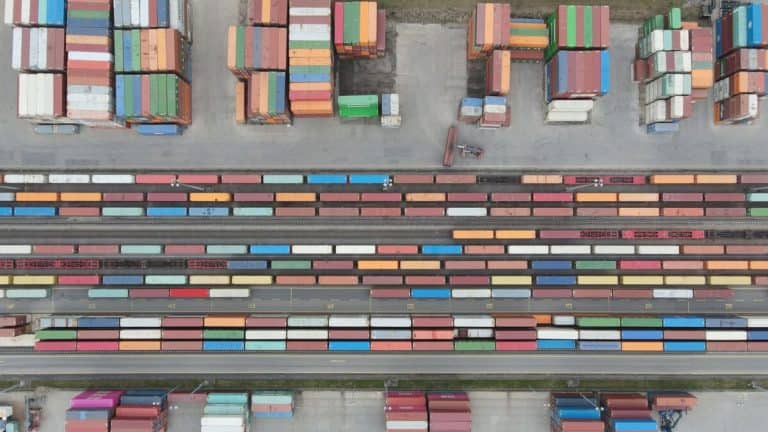
US freight networks logged more than 75,000 thefts last year, costing roughly $200 million annually and prompting railroads to spend millions on fencing and AI-equipped cameras, Fortune reported on Aug. 17, 2026.
Freight trains have become one of the softest targets in American logistics. More than 75,000 thefts were recorded on US freight networks last year, with annual losses running to about $200 million, according to reporting by Fortune. Railroads are answering with fencing, patrols and camera systems wired to artificial-intelligence software that flags intruders in real time — millions of dollars in spending aimed at a loss line that, until recently, most investors never thought about.
The scale is the story. A theft count above 75,000 in a single year is not a crime wave of dramatic heists; it is a grinding, high-frequency problem. Averaged out across the year, that volume implies more than 200 incidents a day on US freight networks — an illustrative figure derived from the reported annual count, not a number railroads publish. It describes an operating environment in which cargo loss is closer to shrinkage at a retail chain than to a one-off security failure.
Why $200 million matters less as a number than as a signal
Set against the revenue of the large Class I railroads, $200 million spread across the industry is not a figure that reshapes a quarterly income statement. That is precisely why it has taken so long to command attention. But the cost of theft is not confined to the value of what walks off a flatcar. Every incident carries downstream expense: claims handling, delayed trains, damaged containers, rerouting, insurance premiums, and the reputational cost with shippers who expect goods to arrive intact.
Those second-order costs are the ones that scale badly. A retailer whose electronics or footwear consignments are opened in transit begins pricing rail against truck differently, and rail’s competitive pitch has always rested on cost per ton-mile plus reliability. Erode the reliability leg and the pricing power argument gets harder to make.
The $200 million figure also functions as a floor rather than a ceiling. Cargo theft is chronically under-reported: low-value losses often get absorbed rather than filed, and the line between theft, damage and paperwork error is blurry in a network moving millions of containers.
Where the losses happen — and why fencing is the first fix
Freight trains are vulnerable at exactly the moments they stop. A train sitting on a siding waiting for a meet, a container yard on the edge of a metro area, a stretch of track running through dense urban terrain — these are the pinch points. Containers are locked, but the locks are commodity hardware, and a stopped train with hundreds of boxes and no one walking the length of it is an unguarded warehouse on wheels.
That geography explains why the industry response starts with physical barriers. Fencing is unglamorous and capital-cheap relative to its deterrent effect, and it addresses the specific failure mode: pedestrian access to stationary rolling stock. It is also the intervention that can be deployed fastest at identified hot spots.
The AI camera layer does something different. Rather than deterring entry, it compresses detection time. Computer-vision systems trained to distinguish a person climbing a container from a maintenance worker or a passing vehicle can push an alert to a dispatcher or local law enforcement while a train is still on the ground. The economics are straightforward: cameras are cheap, human monitors of hundreds of feeds are not, and software that filters the feeds is what makes continuous surveillance affordable across thousands of route miles.
A security line item that behaves like a technology budget
What is notable about the railroads’ response is its shape. Historically, rail security spending meant guards, gates and after-the-fact investigation. The current wave — sensors, machine vision, analytics tied to network operations data — looks like the same technology stack the industry has been building for precision scheduled railroading and predictive maintenance. That has two implications.
- The spending is partly reusable. Cameras and edge computing installed for theft detection can also monitor equipment condition, trespassing risk and crossing safety, which softens the return-on-investment hurdle.
- The vendors are not traditional rail suppliers. Surveillance analytics, edge hardware and connectivity providers are pulling budget that once went to fencing contractors and security staffing firms.
Historically, rail security spending meant guards, gates and after-the-fact investigation.
For investors, this is the practical read-through: cargo theft is unlikely to show up as a distinct headwind in a Class I earnings call, but it is one of several forces pushing rail capital expenditure toward technology and away from pure infrastructure. Watch for it in commentary on operating expense, insurance and claims rather than in a dedicated disclosure.
Supply chains are being priced for loss again
The theft numbers land in a wider context. Organized cargo crime has been an escalating problem across trucking, warehousing and last-mile delivery, and criminal networks move to whichever mode is least defended. Harden truck yards and the pressure shifts to rail; harden rail and it shifts back. That dynamic argues the current railroad spending is less a one-time cleanup than a permanent operating cost, similar to how retailers absorbed loss prevention into standard overhead decades ago.
It also has an insurance dimension. Cargo insurers repricing rail risk pass costs to shippers, who pass them to end customers. A $200 million annual industry loss is small; the premium and deductible adjustments layered on top of it, applied across every intermodal move, are not necessarily so.
Market backdrop on the day
The report arrived on a quiet, mixed tape. As of the last trade at 13:58 GMT on Aug. 17, 2026, the S&P 500 tracker (SPY) was at $775.49, down 0.11% from the prior close of $776.34, trading in a narrow $775.19–$776.91 band. The Dow 30 tracker (DIA) was weaker at $535.15, off 0.31% against a $536.80 close, while the Nasdaq 100 tracker (QQQ) was firmer at $733.34, up 0.31% from $731.07. Nothing in that mix suggests the market is treating freight theft as a macro event, and it shouldn’t — this is a margin-and-operations story, not a rates story.
What to watch next
Three things will show whether the fencing-and-cameras approach works. First, the direction of the annual theft count: if a number above 75,000 flattens or falls next year, deterrence is doing its job. Second, whether railroads begin quantifying security capital expenditure separately, which would signal the spending has grown large enough to warrant disclosure. Third, whether shippers and cargo insurers start writing rail-specific loss terms into contracts — the clearest sign that theft has moved from a nuisance to a priced risk.
Until then, the industry is doing what industries do when losses become predictable: build a fence, point a camera at it, and let the software watch.
Key facts
- Annual theft losses: About $200 million a year on US freight networks
- Incident count: More than 75,000 thefts recorded last year
- Industry response: Millions invested in fencing and AI-equipped cameras
- Market backdrop (13:58 GMT, Aug. 17, 2026): SPY $775.49 (-0.11%); DIA $535.15 (-0.31%); QQQ $733.34 (+0.31%)
Frequently asked questions
How much do thieves steal from US freight railroads each year?
Roughly $200 million a year, according to reporting published by Fortune on Aug. 17, 2026. That figure covers thefts across US freight networks and is widely considered a floor rather than a ceiling, because low-value losses frequently go unreported or get classified as damage rather than theft.
How many freight thefts were recorded last year?
More than 75,000 incidents were logged on US freight networks last year. The volume matters more than any single case: it describes a chronic, high-frequency loss problem closer to retail shrinkage than to a series of dramatic heists, which is why railroads are treating it as an ongoing operating cost.
Where on the rail network do thefts typically occur?
Trains are most exposed when stationary — on sidings waiting for a meet, in container yards near metropolitan areas, and along track running through dense urban terrain. Containers use commodity locks, so a stopped train with hundreds of boxes and no one patrolling its length is effectively an unguarded warehouse.
What are railroads doing about it?
They are spending millions on physical fencing at identified hot spots and on camera systems tied to artificial-intelligence software. Fencing deters pedestrian access to stationary rolling stock; computer-vision analytics compress detection time by flagging intruders to dispatchers or police while a train is still on the ground.
Why use AI cameras instead of more guards?
Cameras are inexpensive, but paying humans to watch thousands of feeds around the clock is not. Software that filters video and only escalates genuine intrusions makes continuous monitoring affordable across long route miles. The same hardware can also serve equipment monitoring and crossing safety, improving the return on investment.
Will cargo theft show up in railroad earnings?
Unlikely as a standalone line. Spread across the industry, $200 million is small relative to Class I revenue. The effects surface indirectly — in claims expense, insurance premiums, delay costs and capital expenditure shifting toward technology. Investors should watch operating-expense commentary rather than expecting a dedicated theft disclosure.
Sources
Photo: Tobi &Chris · Pexels Licence — source