Split Verdict on Whether Sanctions Alone Can Bend Tehran
A State Department official and a retired vice admiral gave opposing readings of the US pressure campaign on Iran, a disagreement that matters for oil risk premiums and shipping.
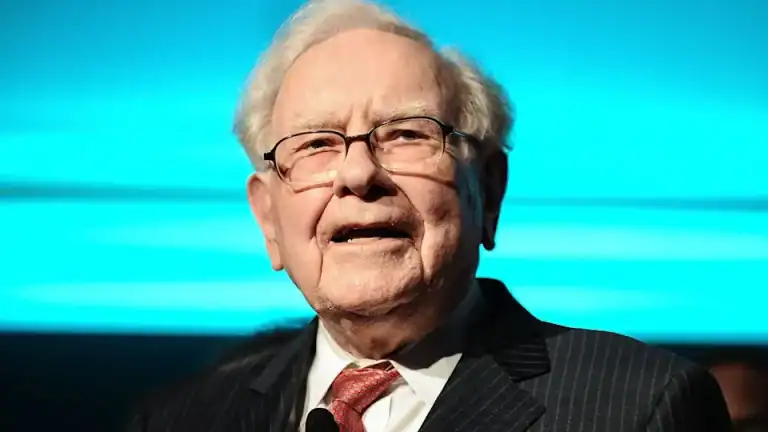
On Bloomberg This Weekend, Acting Principal Deputy Assistant Secretary for the Bureau of Near Eastern Affairs Jen Gavito argued that sanctions alone are unlikely to give Iran an off ramp, while retired Vice Adm. Robert Harward said economic pressure can weaken Tehran when paired with political and military pressure.
Two people who have spent their careers close to the Iran file sat down on the same program over the weekend and came to opposite conclusions about the central question facing US policy: can economic pressure, by itself, change what Tehran decides to do?
Jen Gavito, Acting Principal Deputy Assistant Secretary for the Bureau of Near Eastern Affairs, argued that sanctions on their own are unlikely to produce an off ramp. Retired Vice Adm. Robert Harward took the other side, saying that economic pressure can genuinely weaken Tehran when it runs alongside political and military pressure. Both appeared on Bloomberg This Weekend, as reported by Bloomberg Markets.
The gap between those two positions is not academic. It is the difference between a pressure campaign that has a defined endpoint and one that simply continues, and markets price those two futures very differently.
Why an “off ramp” is the operative word
In sanctions policy, an off ramp is the exit that the coercing side leaves open — a negotiation, a partial suspension, a sequence of steps each party can take without losing face. Sanctions are designed to raise the cost of a course of action until the target prefers a different one. That logic only works if the target believes relief is available on terms it can accept.
Gavito’s argument, as presented, is that the economic instrument is not carrying that weight on its own. Restrictions can compress revenue and complicate trade finance, but compression is not the same as a decision. Absent a credible political track, a pressured government can conclude that enduring the cost is cheaper than conceding, and it hardens rather than folds.
Harward’s counter is the one most military planners make: economic pressure is one leg of a stool. Paired with diplomatic isolation and a visible military posture, it changes the risk calculus in a way that sanctions notices alone never will. On that reading, the campaign is not failing — it is incomplete.
Both propositions can be true at once, which is part of why the debate persists. Sanctions can be materially damaging and still not generate the specific outcome that policymakers set out to buy.
The transmission line runs through oil and shipping
For investors, the Iran question reaches portfolios through a small number of well-worn channels, and it is worth being precise about them rather than treating “Middle East risk” as a single undifferentiated variable.
- Crude supply. Iranian barrels that reach the market suppress prices at the margin; barrels that are choked off tighten balances. How much oil actually clears — as opposed to how much is formally prohibited — depends on enforcement intensity, buyer appetite and the willingness of intermediaries to take legal risk.
- The risk premium. Separate from physical supply, traders price the probability of disruption. Escalation that raises the perceived chance of interdiction, strikes or a chokepoint incident widens that premium even when no barrel has been lost.
- Freight and insurance. Tanker rates and war-risk insurance respond fast to threat perception in the Gulf. Those costs land on refiners and, eventually, on fuel prices.
- Sanctions compliance. Banks, commodity traders, shipowners and insurers absorb rising screening and enforcement burdens. This is a slow, cumulative cost that rarely makes headlines and never fully reverses.
A campaign without an off ramp, in Gavito’s framing, implies these channels stay live indefinitely. Under Harward’s framing, they intensify first and then potentially resolve. The trading implications differ: the first is a persistent low-grade tax on energy logistics, the second is a spike-and-release pattern.
Equities closed the week without registering alarm
A campaign without an off ramp, in Gavito’s framing, implies these channels stay live indefinitely.
Whatever the policy debate, the broad US market went into the weekend calm. As of the last trade on Friday, 14 August 2026 at 20:00 GMT, the S&P 500 tracker (NYSEARCA: SPY) closed at $776.34, down 0.20% from a prior close of $777.88, with a day range of $775.43 to $778.80. The Nasdaq 100 fund (NASDAQ: QQQ) finished at $731.07, off 0.14% against $732.07, ranging between $728.32 and $734.39. The Dow proxy (NYSEARCA: DIA) ended at $536.80, down 0.21% from $537.91, in a range of $536.20 to $538.28.
Those are quiet, narrow sessions. All three closes sat inside tight intraday bands and all three declines were smaller than a quarter of one percent. Geopolitical risk that equity markets take seriously does not usually look like this; it shows up as a widening of ranges, a rotation into energy and defense, and a bid for the dollar and Treasuries. None of that was visible in the final tape of the week.
The reasonable inference is not that the Iran file is unimportant. It is that a televised disagreement between a serving official and a retired flag officer is a signal about direction, not an event. Markets discount events.
What would force a repricing
The useful thing about the Gavito–Harward split is that it sets out two testable paths, and each has observable markers.
If the pressure campaign is going to work Harward’s way, the tell is coordination: economic measures arriving alongside diplomatic moves and a change in force posture, in a sequence that looks deliberate rather than reactive. That combination would be read by oil traders as raising near-term disruption risk while shortening the expected duration of the standoff — bullish crude in the short run, less so further out the curve.
If Gavito’s reading proves right, the marker is drift: additional designations, no negotiating track, and Iranian exports finding buyers anyway through opaque channels. That path produces no dramatic price event. It produces a permanently more expensive, more legally fraught energy trade, and it keeps a tail risk embedded in every Gulf shipping route.
Three things are worth watching regardless of which view wins. First, enforcement actions against shipping and intermediaries, which are the practical measure of whether restrictions bite. Second, tanker and war-risk insurance pricing, which moves before headlines. Third, any sign of a diplomatic channel opening — because that, and only that, is what an off ramp actually looks like.
The unresolved part
Neither speaker claimed sanctions are ineffective. The disagreement is narrower and sharper: whether the economic instrument is sufficient on its own, or only load-bearing when other pressure is applied at the same time. Policy tends to be built as though the first is true, because it is the cheapest option and the one that requires the least political commitment.
For anyone with exposure to energy, freight or Gulf-linked trade, the question to carry forward is not whether pressure is being applied. It plainly is. It is whether there is a defined destination — and on the evidence of this exchange, senior people who have worked the problem do not agree that there is one.
Key facts
- S&P 500 (SPY): $776.34 at the close, -0.20%, as of 14 Aug 2026 20:00 GMT
- Nasdaq 100 (QQQ): $731.07 at the close, -0.14%, as of 14 Aug 2026 20:00 GMT
- Dow 30 (DIA): $536.80 at the close, -0.21%, as of 14 Aug 2026 20:00 GMT
- The disagreement: Gavito: sanctions alone unlikely to create an off ramp. Harward: they weaken Tehran when combined with political and military pressure.
Frequently asked questions
Who are Jen Gavito and Robert Harward?
Jen Gavito is Acting Principal Deputy Assistant Secretary for the Bureau of Near Eastern Affairs at the US State Department. Robert Harward is a retired US Navy vice admiral. Both appeared on Bloomberg This Weekend to assess whether escalating American economic pressure can change Iran’s decision-making, and they reached opposing conclusions.
What does an "off ramp" mean in sanctions policy?
An off ramp is the exit route a coercing state leaves open to the country under pressure: a negotiating channel, a partial suspension of measures, or a sequence of reciprocal steps. Sanctions theory assumes the target will change course only if it believes relief is genuinely available on terms it can accept.
How did US stock indexes close ahead of the discussion?
As of the last trade on 14 August 2026 at 20:00 GMT, SPY closed at $776.34, down 0.20%; QQQ closed at $731.07, down 0.14%; and DIA closed at $536.80, down 0.21%. All three finished within narrow intraday ranges, indicating no broad equity market reaction to Middle East policy risk.
How does Iran policy reach financial markets?
Mainly through crude oil supply, the geopolitical risk premium embedded in oil prices, tanker freight rates and war-risk insurance in the Gulf, and the compliance burden that sanctions place on banks, shipowners, insurers and commodity traders. Each channel can move independently of the others.
Does the split view mean sanctions are failing?
Neither speaker said sanctions are ineffective. The disagreement is about sufficiency. Gavito’s position is that economic measures alone will not produce a resolution. Harward’s is that they do weaken Tehran, but only when applied together with political isolation and military pressure. Both can be accurate simultaneously.
What signals would indicate the situation is changing?
Watch for enforcement actions against shipping and intermediaries, which show whether restrictions are biting in practice; movements in tanker rates and war-risk insurance premiums, which typically shift before headlines; and any sign of a diplomatic channel opening, which is the practical definition of an off ramp.
Sources
- Iran Pressure Campaign Lacks Clear Off Ramp — Bloomberg Markets
Photo: Oleksiy Yeshtokyn,🌻🇺🇦🌻 · Pexels Licence — source