Nvidia's Huang joins Trump's China trip, spurring hopes for H200 deal
Nvidia CEO Jensen Huang will join President Donald Trump during his visit to Beijing, igniting hopes in China that the trip could yield results in the tech giant's long-stalled effort to sell its powerful…
Nvidia CEO Jensen Huang will join President Donald Trump during his visit to Beijing, igniting hopes in China that the trip could yield results in the tech giant’s long-stalled effort to sell its powerful H200 AI chips to local customers.
Huang’s inclusion, along with more than a dozen U.S. corporate chiefs, was not part of the original plan when the White House released its initial list of executives – a roster that included Tesla CEO Elon Musk and Apple’s Tim Cook.
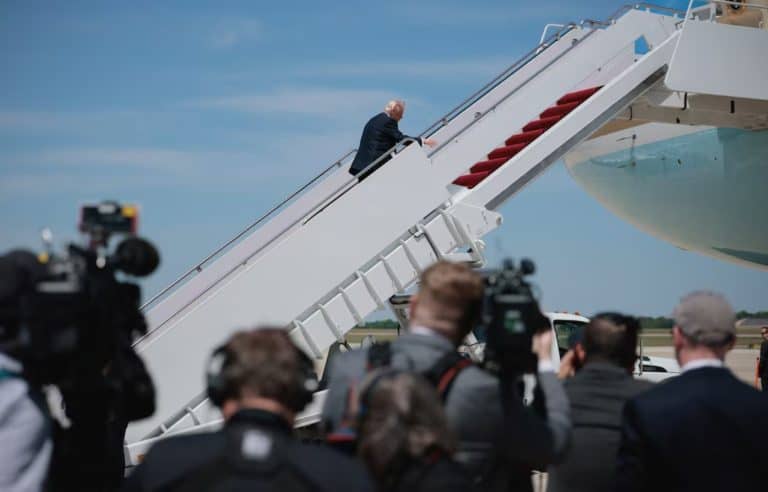
Trump called Huang on Tuesday after seeing media coverage that he had not been invited, a source familiar with the matter said. Huang was subsequently spotted by White House reporters boarding Air Force One in Alaska, joining Trump on his flight to China. They are due to arrive in China on Wednesday evening.
“Jensen is attending the summit at the invitation of President Trump to support America and the administration’s goals,” an Nvidia spokesperson said.
A White House spokesman said Huang’s schedule had changed and that it had worked out for him to attend.
A White House spokesman said Huang’s schedule had changed and that it had worked out for him to attend.
The last-minute development has spurred optimism on the Chinese side of potential progress in the prolonged H200 impasse. The sale of Nvidia’s H200 chips in China has emerged as a flashpoint in Sino-American relations. The China market once generated 13% of Nvidia’s total revenue.
A person at a major Chinese cloud company told Reuters that Huang’s presence was a signal that the long-running standoff could yield positive results.
A source at a major server company said Huang’s attendance could help move the process forward.
Despite the Trump administration authorizing sales of the H200 chips late last year, not a single chip has been sold to a Chinese customer.
Shipments have been stymied by disagreements over the terms of the sales on both sides, sources said.
U.S. Commerce Secretary Howard Lutnick said last month that the chips had not yet been sold to China, citing the difficulties that Chinese companies faced in obtaining permission from their government to proceed with purchases.
The Trump administration gave a formal green light to China-bound H200 sales in January, with conditions attached.
The move ignited deep concern among China hawks in Washington, who fear Beijing could harness the technology to supercharge its military capabilities and narrow the gap with the U.S. in artificial intelligence development.
Chris McGuire, a senior fellow for China and emerging technologies at the Council on Foreign Relations and a former official in the Biden administration, said Huang’s inclusion in the Beijing trip is not appropriate.
“Any deal that allows Nvidia to sell more chips to China means fewer Nvidia chips for U.S. firms, and a smaller U.S. lead in AI over China,” McGuire said. “It is remarkable that President Trump keeps getting convinced to put Nvidia’s interest ahead of America’s.”