Nissin's Cold-Water Cup Noodles Sell Out Across Japan
Nissin Foods Holdings, inventor of instant noodles, has sold out of cup noodles made with cold water in Japan — a surprise summer hit that may open a new product category.
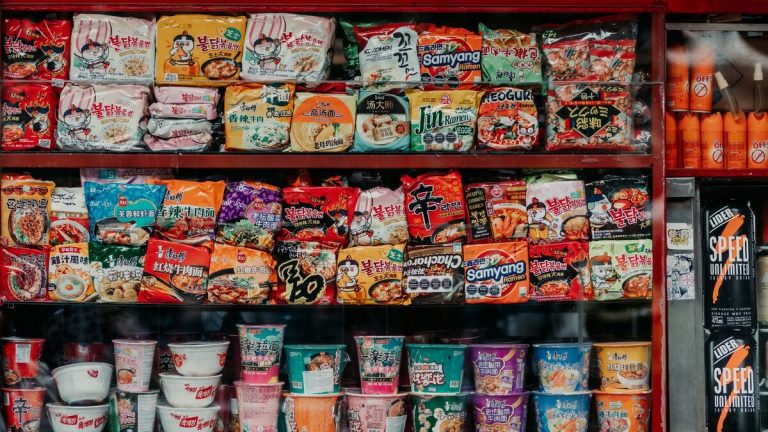
Nissin Foods Holdings Co., the Japanese company that invented instant noodles, has sold out of a cup noodle product designed to be made with cold water, a surprise summer hit that may establish an entirely new instant-noodle category.
Nissin Foods Holdings Co. has spent nearly seven decades selling the idea that hot water plus three minutes equals a meal. Its newest hit inverts the formula entirely: cup noodles designed to be prepared with cold water. According to Bloomberg Industries, the product has sold out in Japan and looks less like a seasonal novelty than the opening of an entirely new category for the company that invented instant noodles in the first place.
That distinction matters. Line extensions — a new flavor, a bigger cup, a limited-edition collaboration — are the ordinary machinery of packaged food. They shift volume for a quarter and fade. A genuinely new preparation method is different: it changes when and where the product is eaten, which changes the size of the addressable market rather than just the share of it.
Why cold preparation is a bigger deal than a new flavor
Instant noodles have always been constrained by a kettle. The category’s core use cases — the office desk, the dorm room, the convenience store counter with its hot-water dispenser, the camping stove — all assume access to boiling water. Remove that requirement and the product moves into occasions it previously could not reach: the beach, the commuter train, the school lunchbox, the disaster kit, the hot afternoon when nobody wants to stand over steam.
Japan’s summers have become a commercial force in their own right. Extended heat has reshaped domestic consumption patterns across beverages, frozen food, chilled ready meals and convenience-store assortments, with retailers reallocating shelf space toward anything served cold. A hot bowl of noodles is a hard sell in that environment. A cold one is a new answer to a question the category had effectively conceded to chilled noodles, salads and cold soba.
The sell-out itself is a mixed signal, as sell-outs usually are. It demonstrates demand well above forecast, which is the good news. It also means unmet demand — shelf gaps that competitors can fill, and a supply chain that has to be rebuilt around a product nobody planned production capacity for. For a manufacturer, converting a stockout into sustained revenue is an execution problem, not a marketing one.
What Nissin has to prove next
Three questions will determine whether this becomes a category or a curiosity.
- Repeat purchase. Novelty drives the first cup. Whether the eating experience — texture, temperature, seasoning that has to dissolve without heat — brings shoppers back a fourth and fifth time is the only test that counts.
- Seasonality. If cold-water noodles sell only in the hottest weeks, they are a summer SKU with a working-capital problem. If they hold volume into autumn, they are a platform.
- Cannibalization versus expansion. The bull case is that cold preparation adds eating occasions. The bear case is that it simply moves existing buyers from one cup to another at similar margin, adding complexity without adding sales.
None of those answers is available yet, and no revenue or unit figure for the product has been disclosed in the reporting. Investors should treat the sell-out as evidence of interest, not as a quantified earnings input.
How competitors are likely to respond
Japan’s instant-noodle market is dense with capable rivals, and preparation method is not easily patented in a way that blocks imitation of the concept. If cold-water noodles hold through the season, expect fast-follow launches — and expect them to arrive precisely while the originator is still short of stock. First-mover advantage in packaged food usually comes down to two things: locking up shelf space with retailers, and owning the phrase consumers use when they ask for the product.
Japan’s instant-noodle market is dense with capable rivals, and preparation method is not easily patented in a way that blocks imitation of the concept.
Nissin’s advantage is brand. Cup Noodles is one of the most recognized food trademarks in the world, and the company’s claim to having invented the category gives it credibility when it redefines it. That is not a moat, but it is a head start, particularly with the convenience-store chains that dominate Japanese distribution and decide what gets a facing.
There is also an export question. If the format travels — and a product that needs no heat source travels unusually well — the relevant market is not Japanese summer but every hot, humid, price-sensitive market where instant noodles are already a staple and boiling water is a cost. That is the version of this story with the largest number attached to it. It is also the most speculative.
The tape it landed on
The news arrived on a broadly weak session for U.S. equities, which sets the risk backdrop even for a Japanese consumer-staples story. As of the last trade at 20:00 GMT on Thursday, Aug. 20, 2026, the S&P 500 tracker (NYSEARCA: SPY) closed at $762.60, down 0.84% from the prior close of $769.06, having traded between $762.04 and $768.15 — finishing at the low end of its range. The Nasdaq 100 tracker (QQQ) ended at $710.93, off 0.72% against a prior close of $716.08, with a day range of $708.52 to $714.94. The Dow tracker (DIA) was the weakest of the three, closing at $527.59, down 1.25% from $534.27.
Days like that tend to punish story stocks and reward defensiveness, and food manufacturers usually sit on the defensive side of that trade. But a single hit product does not re-rate a staples company on its own. What re-rates a staples company is durable volume growth at stable margin — and the cold-water noodle will be judged on exactly that, over several quarters, not several weeks.
What to watch
The concrete markers from here are supply and shelf. Watch for Nissin restoring availability and whether it does so with expanded capacity or rationed allocation. Watch whether the product gets permanent planogram space in Japanese convenience stores rather than a promotional endcap. Watch for a second cold-water product — a broth variant, a noodle format, a smaller cup — because a family of SKUs is how a company signals internally that it believes it has a category rather than a fad. And watch for the first credible competitor launch, which will be the market’s own verdict on whether cold water was a good idea.
For now the verifiable facts are narrow and worth restating plainly: the inventor of instant noodles built a cup noodle for cold water, Japanese shoppers cleared the shelves, and the company may have opened a product category that did not exist. Everything else is a forecast.
Key facts
- Company: Nissin Foods Holdings Co., inventor of instant noodles
- Product: Cup noodles prepared with cold water — sold out in Japan
- S&P 500 (SPY): $762.60, -0.84%, last trade 20:00 GMT Aug. 20, 2026
- Dow 30 (DIA): $527.59, -1.25%, prior close $534.27
Frequently asked questions
What is Nissin’s cold-water cup noodle?
It is an instant cup noodle product from Nissin Foods Holdings Co. designed to be prepared with cold water rather than boiling water. It has sold out in Japan and has been described as a surprise summer hit, potentially creating an entirely new instant-noodle category distinct from the conventional hot-water format Nissin invented.
Why does cold preparation matter commercially?
Traditional instant noodles require access to boiling water, which limits where and when they can be eaten. Removing that requirement opens occasions such as outdoor use, commuting, school lunches and emergency supplies. That expands the addressable market rather than simply shifting share within it, which is why a preparation change matters more than a new flavor.
How much revenue has the product generated?
No revenue or unit sales figure for the cold-water cup noodle has been disclosed in the reporting. The verified facts are that the product sold out in Japan and is viewed as a potential new category. Investors should treat the sell-out as evidence of demand interest, not as a quantified contribution to earnings.
Does a sell-out help or hurt the company?
Both. Selling out proves demand ran ahead of forecast, which validates the concept. But it also leaves unmet demand and empty shelf space that rivals can fill, and it forces the manufacturer to build production capacity for a product it did not plan around. Converting a stockout into sustained sales is an execution challenge.
Could competitors copy the format?
Yes. A preparation method is difficult to protect in a way that prevents rivals from launching similar products, and Japan’s instant-noodle market has several capable manufacturers. Fast-follow launches are likely if the format holds through the season, potentially arriving while the originator is still short of stock and rebuilding availability.
How did U.S. markets close on the day of the report?
U.S. equities were broadly lower. As of the last trade at 20:00 GMT on Aug. 20, 2026, the S&P 500 tracker SPY closed at $762.60, down 0.84%. The Nasdaq 100 tracker QQQ ended at $710.93, down 0.72%, and the Dow tracker DIA fell 1.25% to $527.59, the weakest of the three.
Sources
- Cold-Water Cup Noodles Sell Out in Japan as Surprise Summer Hit — Bloomberg Industries
Photo: Gera Cejas · Pexels Licence — source